


PLAINFIELD – Michael Billingsley may be stepping down as the town’s emergency management director, but he’s not retiring just yet.
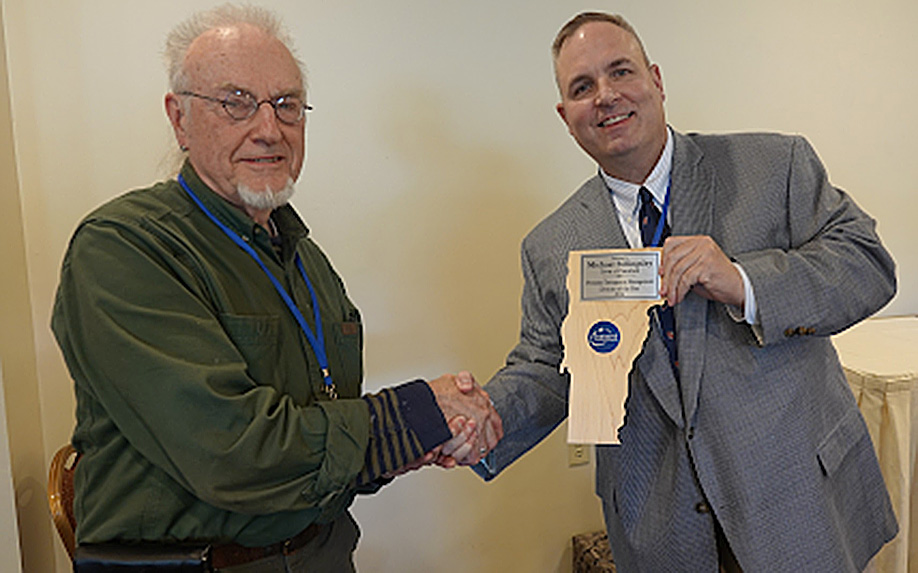
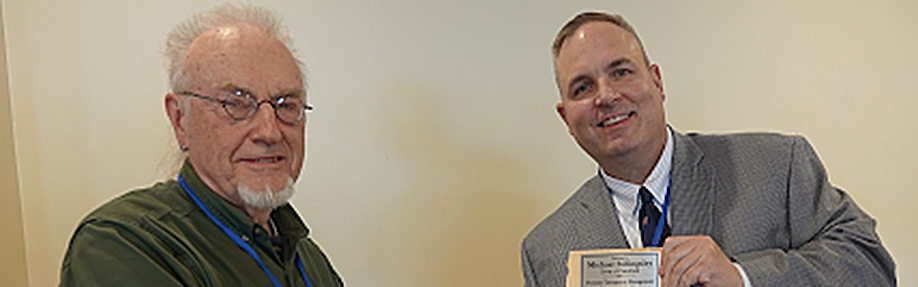
photo courtesy Vermont Emergency Management website
Because the incoming emergency management director cannot always be in Plainfield, Billingsley views a gradual succession plan as the most practical path forward.
“I volunteered myself to be the eyes and ears,” Billingsley said.
He will take a back seat on the emergency management team by becoming the Plainfield hazard mitigation specialist.
Billingsley first served as the town’s emergency management director from 2015 to 2019 before stepping away. When Plainfield again needed a director, he returned one month before the major floods of 2023.
While every Vermont town is required to have the position, Billingsley distinguished himself by working not just for Plainfield residents, but also for other communities. His efforts earned him Vermont’s Emergency Management Director of the Year award in 2024.
Billingsley is “an unsung hero,” said Emily Harris, engagement section chief at Vermont Emergency Management. “Michael puts Plainfield first and goes above and beyond to try and pull resources to respond and recover from a disaster.”
Billingsley knows firsthand how disasters can alter lives. His home flooded in 2023. Repairs to his basement and furnace cost more than $10,000. Repairing damage to the house siding cost nearly $30,000.
With the recent influx of environmental disasters, Billingsley believes looking out for neighbors is the best approach to navigating difficult times.
“All I’m doing is emphasizing something that helps any strong community and provides ways in which people can be aware of each other’s needs,” he said. “Which is to say to be curious about each other and to be aware of who your neighbors are, what their names are, what their various issues might be or their strengths. And be prepared to join together.”
Emergency management is a proactive approach to preparing for future disasters. Officials identify vulnerable areas where residents might be affected, such as steep valleys and changing floodplains. They prepare plans and organize resources for those in need.
After disasters occur, Billingsley uses satellite and aerial imagery to estimate the extent of the damage. Through word of mouth, he coordinates where volunteers go first.
Billingsley has a background in hazard mitigation. It helps him and his team analyze how Vermont’s weather and topography are affected by changing climate patterns. Vermont’s mountainous terrain includes significant sediment and lake deposits, which are unstable. At the same time, climate change is increasing evaporation, leading to more intense rainstorms.
Instead of rainfall flowing safely into rivers and larger watersheds, landslides are eroding riverbanks, causing collapses. The erosion carries silt to the surface, uproots trees, clogs bridges and backs up water systems.
Some bridges and roads cannot be rebuilt because rivers continue to erode and destroy them. Multiple researchers are collecting data to help communities avoid rebuilding in areas likely to be repeatedly damaged.
One day etched in Billingsley’s memory is July 10, 2024. Great Brook swelled into a destructive river that uprooted houses, roads and bridges and swept them downstream. The next morning, residents walked through a devastated downtown.
Hundreds of volunteers arrived to assist with repairs and recovery. Volunteers provided shelter for displaced residents, and churches opened a commercial kitchen for those unable to prepare food.
AmeriCorps members are also assisting with flood recovery and prevention efforts, he said, and are actively seeking recruits. Additional positions are expected to be posted in the coming weeks.
Initially, the Federal Emergency Management Agency (FEMA) provided boots-on-the-ground support, with agents going door-to-door to assist Plainfield residents with submitting federal claims.
Billingsley said that since the beginning of the second Trump administration, FEMA’s funding and ability to respond to emergencies have become increasingly strained.
An effective emergency management director must project confidence, ensure continuity and lead with compassion, he said. Caring for the entire community is essential, but prioritizing the safety of residents with disabilities is critical.
“We’ll have to set aside our divisions, both political and spiritual, class differences, and move more effectively as a community with open hearts and clear thinking,” Billingsley said.
Eisha Qureshi writes for the Community News Service, a University of Vermont journalism internship for the Hardwick Gazette.
editor’s note: An earlier version of this story capitaized ‘hazard mitigation specialist,’ which was not a title.


