


NORTH ADAMS, Mass. – If planting something beneath a tree, or growing grass there, it’s possible to grow successfully in a shady, full-of-roots location.
While it’s true that planting under a tree does present challenges, that doesn’t mean it’s more trouble than it’s worth.
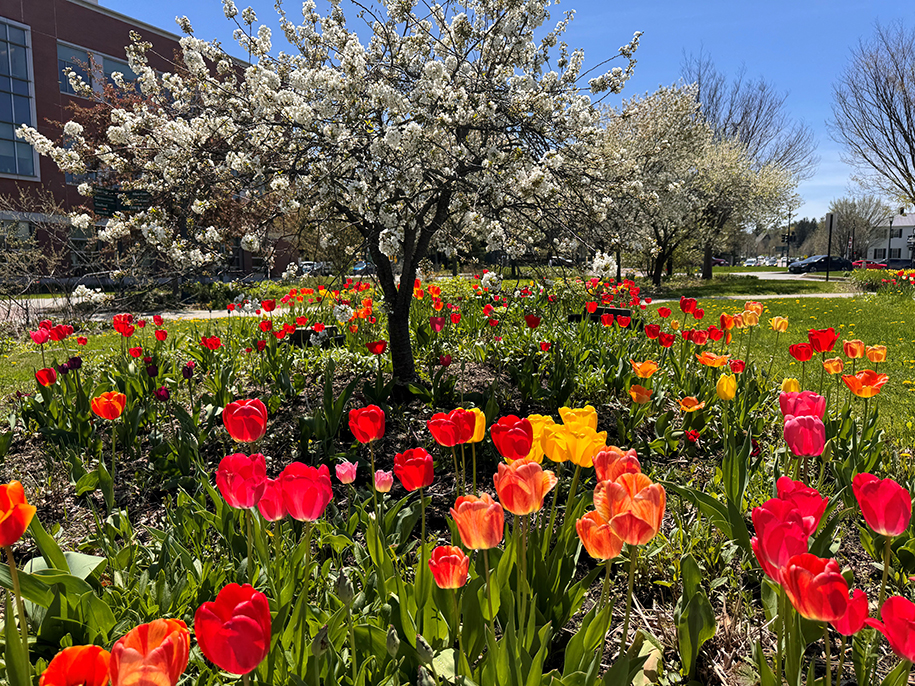
photo by Debra Heleba.
Any plants sharing soil will compete with one another for resources, whether that’s water, nutrients or even a place to spread their roots. Since trees are just very big plants, they’re likely going to win that competition compared with those of much smaller size growing beneath them. The trick is to provide enough of what they need for both a tree and its companions to share and grow successfully.
Sometimes, the problem isn’t just competition for resources. Some trees are allelopathic, meaning that they produce a substance that actively discourages the growth of other plants. Black walnut trees (Juglans nigra) roots, leaves and nut hulls secrete a toxin called juglone which does just that. Even so, plants such as wild ginger (Asarum canadense), ostrich fern (Matteuccia struthiopteris) and serviceberry (Amelanchier spp.) are suitable to grow beneath black walnut trees.
Of course, if the tree is not among those that are allelopathic, there will be more options in choosing shrubs, perennials and groundcovers that are shade-tolerant, drought-tolerant and have shallow root systems.
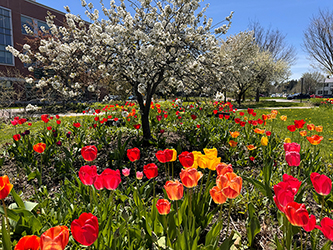
Consider small spring-blooming bulbs such as snowdrops (Galanthus), grape hyacinth, (Muscari armeniacum) and squill (Scilla siberica) for flowers and color in early spring before trees are fully leafed out. Small bulbs, planted individually, can be easily nestled among tree roots with little disruption.
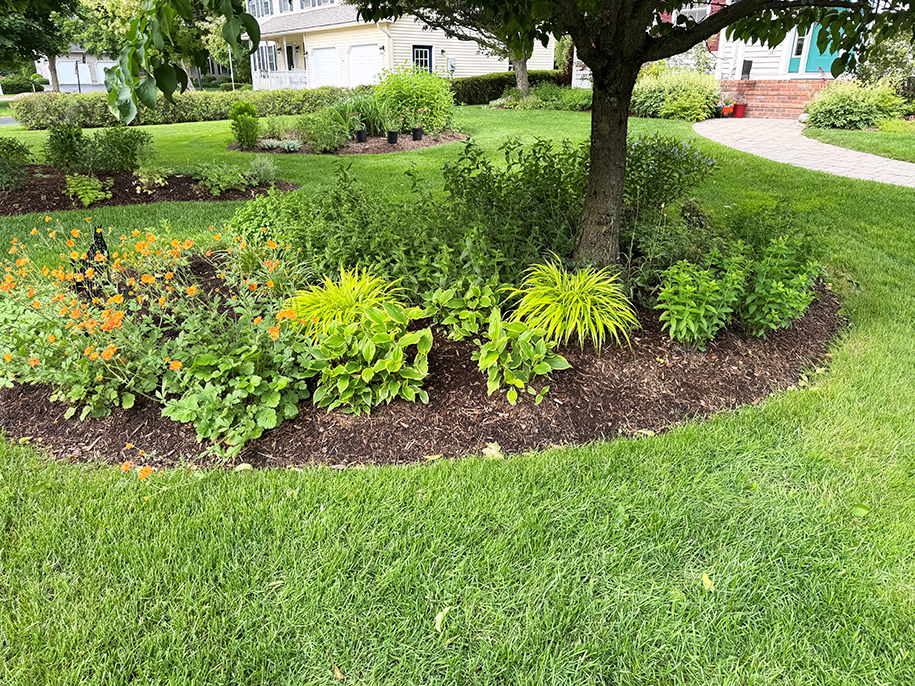
photo by Amy Simone.
Shade tolerant perennials such as hosta (Hosta), lady’s mantle (Alchemilla mollis), fringed bleeding heart (Dicentra eximia), foamflower (Tiarella) or coral bells (Heuchera) can produce attractive displays as a mass planting or as part of a mixed group with a variety of color, leaf shape and texture. Selecting perennials, rather than annuals, can avoid the need to repeatedly disturb roots by replanting each year.
Hand-pull any weeds and use a hand trowel to remove grass from beneath the tree.
Keep in mind that the planting area may be congested with roots of various sizes and that the health of the tree depends on them. Avoid using spades, shovels or other large digging instruments that could cut, nick, or otherwise damage those roots. Don’t cut or remove larger roots. While thin, fibrous roots can regrow, damage to larger roots takes much longer and risks the health of the tree through disease or insect infestation.
For best results, select starter-sized plants and dig a hole just large enough to accommodate the root ball. If the tree’s roots present a barrier to digging, try another area nearby. Plant, then fill the hole with soil and water well.
After planting beneath the tree, apply a thin layer of mulch to help retain moisture. Be sure to avoid covering any above-ground roots and leave an area at least thrfee inches (or more) from the trunk free from mulch to protect the root flare.
During the hot summer months, a weekly, deep watering will help ensure there will be enough water to satisfy thirsty young plants and the tree, too.
Deborah Benoit is a UVM Extension Master Gardener living in North Adams, Mass., who volunteers as a garden columnist and participates in Bennington County Extension Master Gardener Chapter activities.

Deborah J. Benoit
Deborah Benoit is a UVM Extension Master Gardener who volunteers as a garden columnist and for Bennington County Extension Master Gardener Chapter activities.


