


SOUTH BURLINGTON – Slugs are a tenacious foe in the home garden, as they do their work at night and are capable of wreaking havoc quickly. To combat them, you need to understand what conditions they prefer, what plants they target, and how to protect your garden from their assaults.
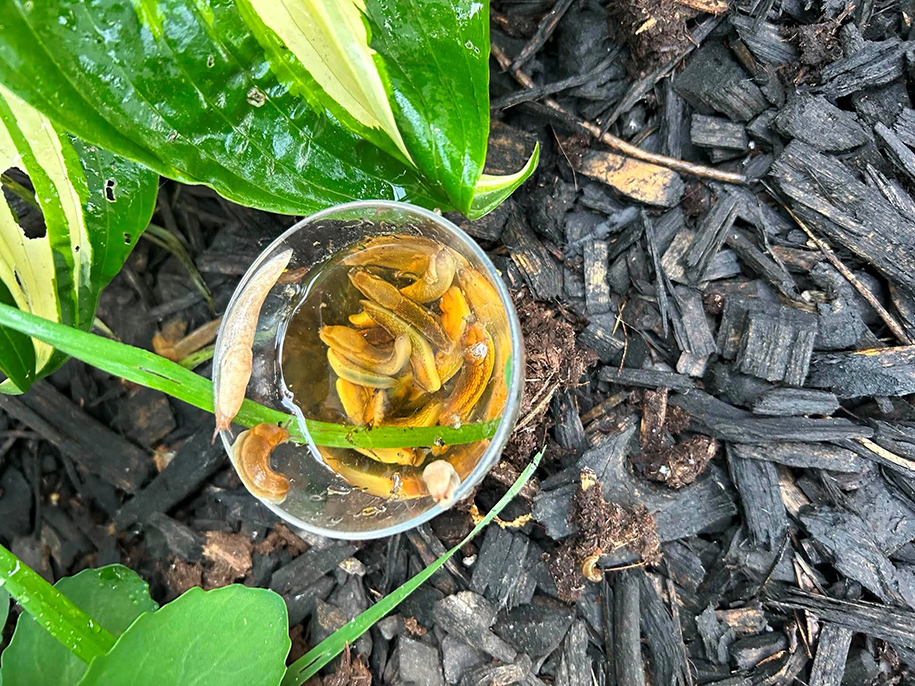
photo by Rosalie Covey Hinckley
A slug is a type of mollusk in the clam and oyster family. It is a slimy, soft-bodied, brown or grey-colored legless creature that can be one-quarter to two inches in length. They have two pairs of feelers on their heads, the upper pair containing the eyes and the lower pair that facilitates their sense of smell. They move themselves using the slime that they produce.
In early spring, you may not be aware of their presence as their eggs have been overwintering in plant debris, mulch, and on wood boards. But from spring to early summer, the eggs hatch and the hungry slugs set out looking for nourishment.
Slugs’ preferred plants are ornamentals like bellflower, larkspur, plantain lily (Hosta), daylily, dahlia, and lungwort. They also target vegetables and fruit such as strawberries, basil, beans, cabbage, and lettuce. Seedlings are especially vulnerable to their damage.
As you create a plan for a slug-free garden, begin by removing their most common egg incubation sites. Since hostas are a favorite plant, be sure to cut all foliage back in the fall to deny them a place to overwinter their eggs. Also, remove any chopped leaves that you may have used as winter mulch.
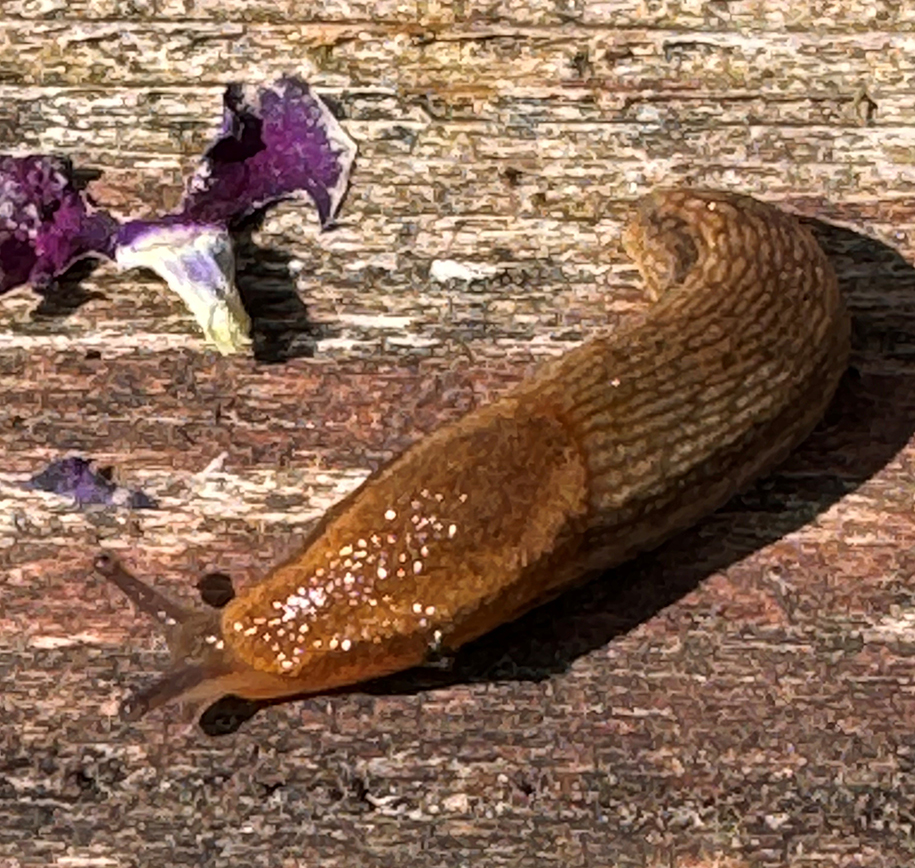
photo by Debra Heleba
Next, understand that slugs seek out cool, damp, shady areas in which to live and feed. Therefore, divide, thin, prune, or stake plants to raise them away from soil and to improve the air circulation around them. Water in the morning and be sure to put the water right at the root zone, not on the plant parts. Improve drainage in soil that is constantly damp by adding compost.
Most importantly, monitor your plants regularly to catch any damage and address it quickly before your plant’s health is compromised. Slug damage will be noted by a trail of slime and irregularly shaped holes in leaves, flowers, and fruit. Use a flashlight at night to locate them.
Handpick the culprits from your plants and either crush them or drop them in soapy water. To attract many slugs, set out flat boards, shingles, or damp newspapers. Turn these over in the morning and kill the slugs attached to them. Repeat daily until there are no more slugs.
Fermented liquid traps can also be used. Bury a vessel such as quart-sized yogurt container 6 to 7 inches deep with the rim at soil level. Fill it with beer or a mixture of 1 teaspoon yeast to 3 ounces warm water to 1 inch below the rim. Slugs are attracted to the odor and will drown. Clean out the trap, refill, and repeat until no longer needed.
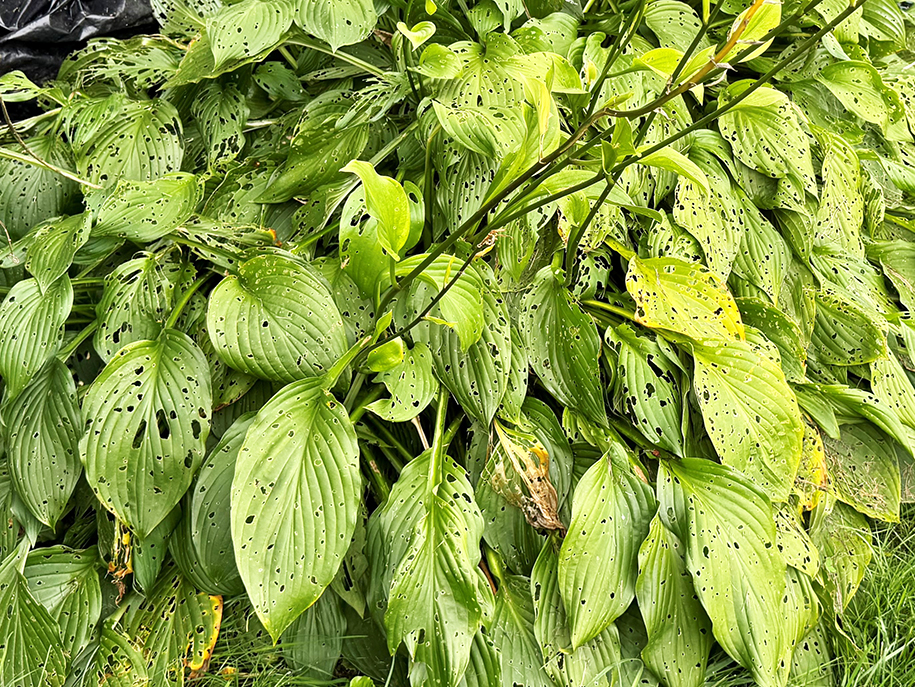
photo by Debra Heleba
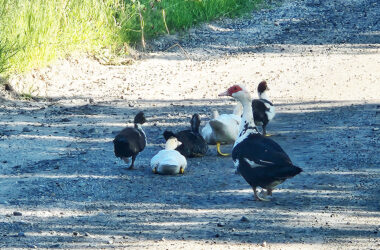
Invite the natural enemies of the slug to your garden. Ground beetles, rove beetles, fireflies, toads, snakes, turtles, shrews, ducks, starlings, and other birds will happily munch on your garden pests.
Baits may be used as a last resort. Your local garden center will have a variety of effective organic management options that contain iron phosphate. Products with this active ingredient will naturally degrade into the soil and will not harm pets. Follow the package directions.
Take that, Mr. Slug!
For answers to your home gardening questions, contact the University of Vermont Extension Master Gardeners Helpline online at https://go.uvm.edu/gardenhelpline or by phone at 802-656-5421 on Thursdays from 9 a.m. to 12 p.m..
Amy Simone is a UVM Extension Master Gardener volunteer from South Burlington.

Amy Simone
Amy Simone is a UVM Extension Master Gardener from South Burlington.


