

HILLSBOROUGH, N.H. – The Northeast has experienced significant ice storms throughout history, and we may be due for another one. Though we see icing in many winter storms, including recent ones, major ice storms cause widespread damage to forests and infrastructure, and occur in the northeast every 15 to 25[Read More…]
The Outside Story

Bees at Home in Holes and Hollows
BURLINGTON – On a subzero morning, I clip into skis and head out across my meadow, gliding between desiccated husks of sundial lupine (Lupinus perennis) poking up above the snow. I imagine this spot eight months ago, as I watched bumblebees, mason bees and sweat bees forage among them. Back[Read More…]

Northeastern Hawks Soaring through Winter
BROOKFIELD – Driving on Vermont’s Interstate highways in winter, I often notice large hawks perched in trees on woodland edges at regular intervals along the road. With the stark landscape providing better visibility and many bird species gone for the winter, this is a great time of year to hawk-watch.[Read More…]

More than a Nest: Squirrel Dreys
WASHINGTON, D.C. – In the starkness of winter, squirrel dreys reveal themselves in the tree canopy. They’ve been there all along, just screened by trees’ leafy crowns for much of the year. Dreys are shaggy masses of leaves nestled against a tree trunk or cupped in a fork of branches[Read More…]

Frost Quakes: Groans of Old Man Winter
NEW ENGLAND – As the winter sun set on February 3, 2023, the Caribou, ME., branch of the National Weather Service (NWS) was flooded with reports of seismic activity. James Sinko, the office’s hydrology program manager, recounted Mainers calling in from across the state’s Hancock, Penobscot, Piscataquis and Washington counties[Read More…]

Bohemian Waxwings: Intrepid Winter Wanderers
FRANCONIA, N.H. – Walking along a dirt road last winter, I heard a collection of pleasant, sputtering trills coming from a stand of conifers and hardwoods nearby. I’m used to the winter conversation of chickadees around feeder and woods, the cawing of crows and blue jays in the yard, and[Read More…]

White-footed Mice Seeking Warm House
BROOKFIELD – During winter, I often hear gnawing and the scurrying of little feet inside the walls of our house. Mice have taken shelter in our old farmhouse again. Although I hate killing the cute creatures, after we had to hire a carpenter twice to remove sections of our walls[Read More…]
Horned Larks Enliven Sleeping Fields
NEW ENGLAND – Halloween is long past, but you may notice devilish figures hanging out in scrubby fields and open areas this winter: horned larks. These birds are North America’s only true lark species. They reside year-round in parts of the Northeast, such as Vermont’s Champlain Valley, but disperse across[Read More…]
Bark Helps Trees Weather Winter
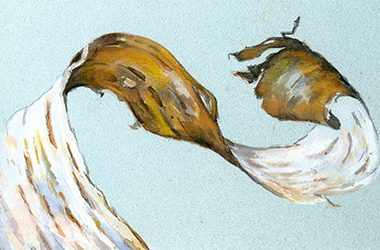
CHAMPLAIN VALLEY – When I think about winter survival, my mind first goes to wildlife: field mice curling up in nests, chickadees flocking to bird feeders, and amphibians burrowing into the mud. Rarely do I think about the adaptations of our northern species that can’t grow thicker fur, fluff up[Read More…]

Bumblebee Photographed in Woodbury Yard is a New Species in Vermont.
WOODBURY – It took a photo, a drawing, a naturalist’s boundless curiosity, and bee experts from across the nation for Vermont to claim a new bumblebee species for the state last week. In 2008, artist and naturalist Susan Sawyer snapped a beautiful photo of a bumblebee in her yard. “I[Read More…]

Recent Canada Lynx Sightings a Result of Vermont Conservation
VERMONT – Six years had passed without a confirmed sighting of a Canada lynx in Vermont. That all changed August 17. Over the summer, several Rutland County residents spotted what the Vermont Fish & Wildlife Department confirmed was a juvenile male Canada lynx. Since then, the department has confirmed more than 15[Read More…]
Hophornbeam: Tough Little Tree
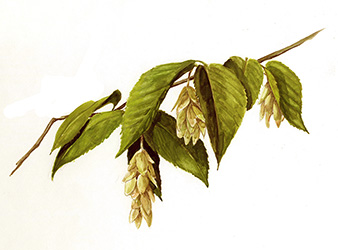
BROOKFIELD – Wandering through the woods this time of year, occasionally I’ve come across a small deciduous tree laden with cone-like structures that resemble the hops used to brew beer. This is the American, or Eastern, hophornbeam (Ostrya virginiana). A member of the birch family, hophornbeam grows in the understory[Read More…]


