

WASHINGTON, D.C. – As the height-of-summer floral abundance fades, goldenrods and asters fill the landscape with hits of yellow, purple, pink, and white. Beyond the beauty they provide, these late bloomers are a critical food source for several native species of wild bees. During late summer and fall, many specialist[Read More…]
The Outside Story

How Wet Weather Affects Fall Foliage
READING – The Northeast is famous for its fall foliage, as the lush, green leaves of summer transform into bright hues, turning hillsides and valleys into quilts of scarlet, ochre, and gold. Among the brightest foliage is that of our region’s various maple species. But as our summers have become,[Read More…]

Specialized Species: A Study in Pink and Yellow
WHITE RIVER JUNCTION – As a budding ecologist who grew up in central Texas, I’ve long been an admirer of the Pink Evening Primrose (Oenothera speciosa). I said a mournful goodbye to the delicate wildflowers before my parents moved up to Vermont. After a few months of living here, I was[Read More…]

Black Willow Provides Many Ecological Benefits
HOPKINTON, N.H. – I often spot black willow trees as I’m kayaking along a riverbank or lakeshore. While perhaps less picturesque than its (non-native) cousin the weeping willow, black willow is native to the Northeast and provides a host of ecological benefits. Willow trees are in the Salix genus, along[Read More…]

New England American-Asters are Stars of Late Summer
FINGER LAKES REGION, N.Y. – Before the trees put on their colorful autumnal cloaks, the newly rewilded fields at my home turn to gold and purple. New England American-aster (Symphyotrichum novae-angliae) begins blooming in August or September and continues to splash the meadows with deep purple color well into October,[Read More…]

How Water Striders Manage Raindrops
DUXBURY – Water striders are a common sight on ponds, vernal pools, and puddles. During clear summer days, these insects seem to walk on water, a feat they accomplish through a combination of long legs that distribute their weight across the water’s surface and micro hairs that make these invertebrates[Read More…]

Seeing Red: Wolf’s Milk-slime and Red-backed Salamanders
WHITE RIVER JUNCTION – While some outdoorsy Vermonters spend their summer leisure time fishing, boating, or gardening, others find enjoyment spotting decomposing logs along wooded trails. On a sunny June day, the Vermont Center for Ecostudies summer interns took a hike on Mount Cardigan and excitedly herped all the way to the[Read More…]

The Eye-Opening Realm of Avian Sleep
READING – Birds exist in a fluid and unpredictable world. Survival depends on remaining constantly alert, adapting and responding to encounters with predators and environmental conditions that change with the seasons, weather, and geography. But sleep is also essential, providing rest, rejuvenation, and healing. Normally, day-active (diurnal) animals sleep at[Read More…]
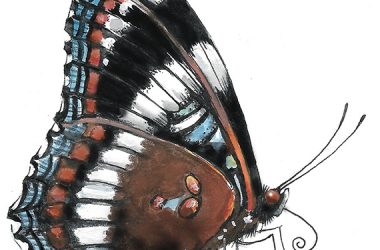
White Admirals Winging Through the Woods
BROOKFIELD – Walking on a woods road beside a stream in early July, I spotted several tight clusters of butterflies perched on scat piles and on wet sand near the brook. When one of the butterflies spread its wings, I saw that its topside was black with blue shading, and[Read More…]

The World According to Ferns
Ferns have grown on Earth for longer than trees and flowers, and existed well before Homo sapiens. In our region, the oldest lineage, emerging 200 million years ago, is the royal fern family (Osmundaceae), including royal, cinnamon and interrupted ferns. Named for the fertile, spore-producing pinnae that “interrupt” the rest[Read More…]

The Saga of the Sunapee Trout (a.k.a. Arctic Charr)
READING – If you wanted to see the Sunapee trout, you might be inclined to search in its namesake, New Hampshire’s Lake Sunapee. But this elusive fish has long been extirpated from the Granite State, and from neighboring Vermont, where it once lived in the Northeast Kingdom’s Averill Lakes. Sunapee[Read More…]
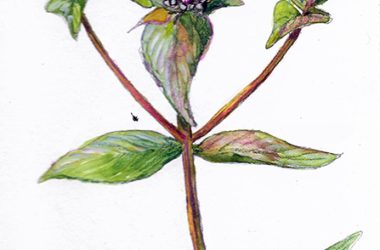
The Many Virtues of Mountain-Mint
NEW ENGLAND – Behind my garden of native plants, one scrappy perennial holds its own among the tangle of goldenrod stalks and blackberry brambles. Its swaying flowerheads buzz with a throng of insects: golden digger and great black wasps, bumblebees, sweat bees, butterflies, and beetles. This pollinator magnet is mountain-mint.[Read More…]


