


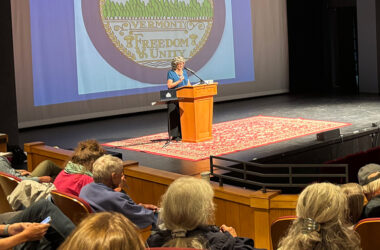

GREENSBORO – Katherine Sims presented a workshop, “How to Follow and Influence Your State Lawmakers” Saturday, following the legislative update program with Lt. Gov. John Rodgers and Rep. Leanne Harple.
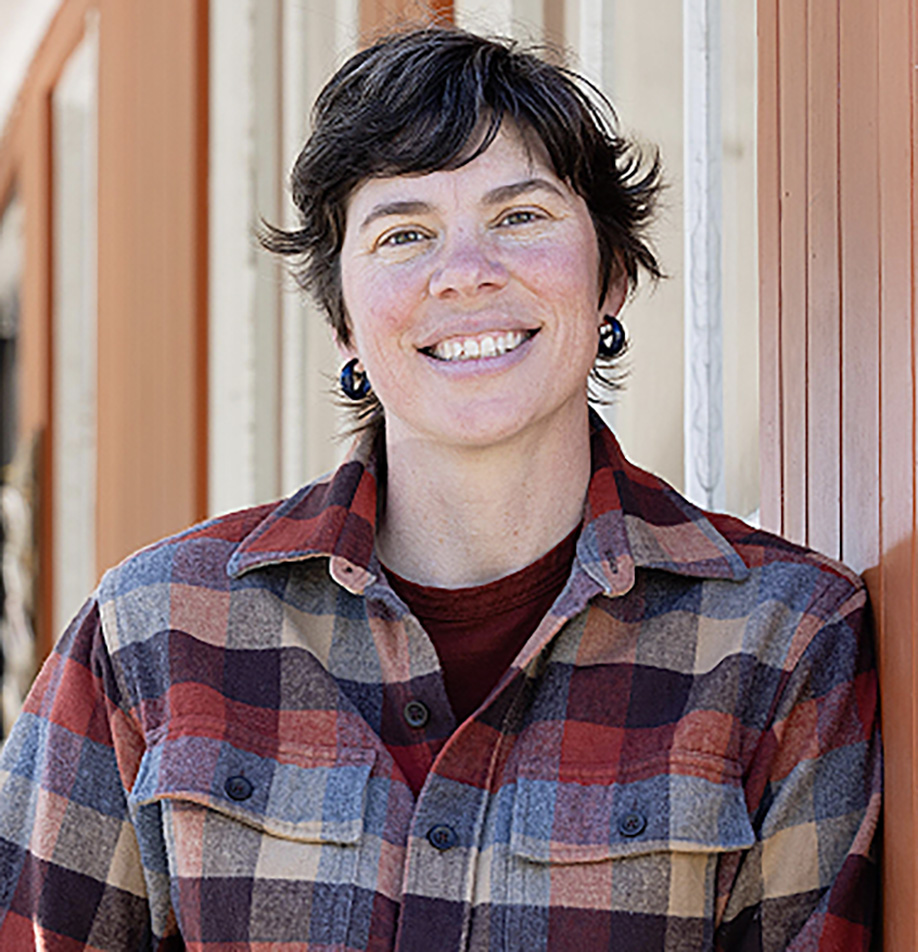
She began with an overview of the legislature’s work, what role it plays between national and local governments, what the two-year Vermont legislative biennium timeline looks like for passing legislation and how Vermonters can influence their representatives.
Sims’ shared the focus of federal, state and local governments, with state government being responsible for election laws, education funding, state roads, health care, housing, environmental regulations and business licensing, she said. Zoning, town roads, school boards, public libraries and municipal property taxes fall to towns.
Sims’ explained the work of a legislator that doesn’t end when the January to May session is over and how public servants in state departments work under the direction of the governor year-round. She said Summer is a time for legislators to participate in study committees, offering opportunities for constituents to build relationships with them. Fall is a time to meet legislators in your district and attend community forums, she said. When the legislature is in session, between January and May there are opportunities to visit the state house, testify and call or email representatives. During election years, she suggested asking candidates where they stand on issues.
Nancy Hill expressed her appreciation for Sims’ explanation of the timing of the state’s legislative biennium, saying, “after 80 years in Vermont, this is new to me.” Education about it should happen in schools, she said.
Sims’ walked everyone through a timeline of how a bill can become a law, saying that roughly only 10 to 15 percent of bills ever become law.
She then offered a breakdown of the many ways to communicate with legislators: by email, a phone call, mail, in-person and by giving testimony to committees and social media, with the most effective being in-person where relationships are built. Most importantly, she said it’s best to be brief, specific and respectful, say you’re a constituent, share a personal story and make a clear request. Don’t send form letters with no local connection or get aggressive or partisan, she said.

Paul Fixx is editor of The Hardwick Gazette and lives in Hardwick.


