


VERMONT – October and fall mushroom season is upon us, and plenty of Vermont fungi are adding to the spooky Halloween vibes.
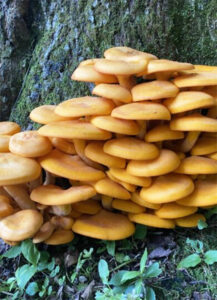
While carved jack o’lanterns are lighting porches and front steps, their mushroom counterparts illuminate the forests with an eerie glow. The bright pumpkin orange Omphalotus illudens, or Eastern Jack O’ Lantern Mushroom, is bioluminescent. Amazingly, the gills of this species emits a faint green light that can be seen on the darkest of nights. The light is produced by an enzyme called luciferase, the same type of chemical responsible for bioluminescence in fireflies. You can find these large, showy mushrooms growing in dense clusters on hardwood stumps and buried, decaying tree roots. Foragers hunting for edibles such as Chicken of the Woods and Chanterelles should be careful not to confuse them with the poisonous jack o’ lantern mushroom. Though not deadly, consumption can cause severe gastrointestinal symptoms that can last several days.
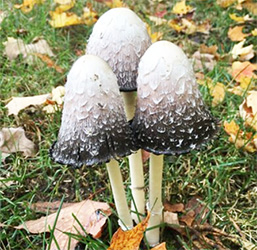
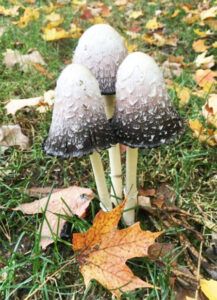
This month, the ghostly white forms of Shaggy Mane Ink Caps (Coprinus comatus) may be haunting a lawn near you. Particularly abundant after rain, these cylindrical mushrooms can seemingly appear out of nowhere and disappear just as quickly. Ink cap mushrooms undergo a self-digestion process called deliquescence, whereby they turn themselves into inky, black goo. The spores of shaggy manes, otherwise trapped deep inside the bell-shaped caps, are exposed to air currents as the mushrooms melt themselves from the bottom up. This species can go from pristine white to a black puddle on the grass in as little as 24 hours. Ink cap mushroom ink can actually be used for writing and drawing. The illustrations in the book Entangled Life by Merlin Sheldrake were created using the ink from shaggy mane mushrooms.
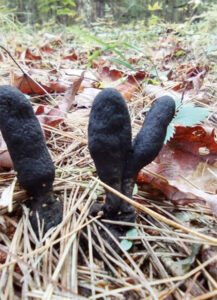
It’s not difficult to see how Dead Man’s Fingers (Xylaria polymorpha) got its name. The slender, crusty, charcoal gray to black mushrooms of this macabre-looking fungus resemble creepy corpse fingers in a spine-chilling movie. Though often found growing singly or in small groups on decaying logs, sticks, and wood mulch, they occasionally appear in larger numbers, zombie apocalypse-style, as though the hands of the undead are clawing their way out of the forest floor. As frightening as that may sound, Dead Man’s Finger fungus is actually quite beneficial, happily going about its important job as a decomposer. As critical members of nature’s recycling crew, fungi such as Xylaria polymorpha play an essential role in forest ecology. Without them, wood would never decay, we would be buried deep in piles of dead trees, and valuable nutrients would be locked up and unavailable to other organisms. Now that’s scary.
Meg Madden is a staff member at the Vermont Center for Ecostudies.


