
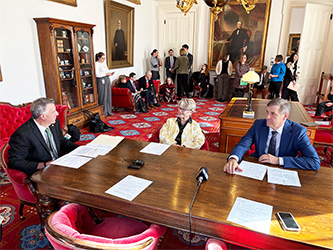




VERMONT – Vermont officials voted to fund food assistance for the first half of November on Wednesday in the absence of federal funding while the shutdown continues in Washington, D.C.
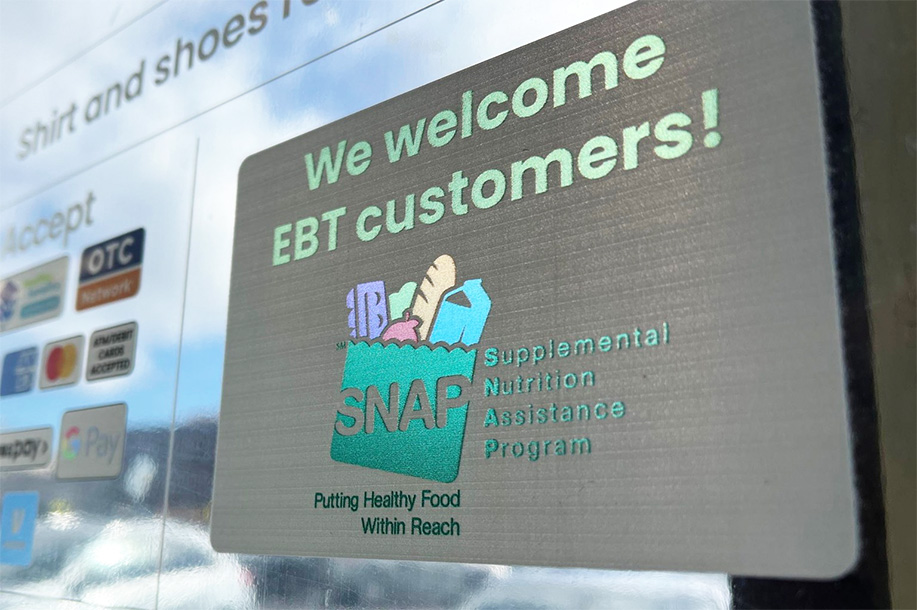
photo by Glenn Russell, VTDigger
At a Tuesday meeting, Gov. Phil Scott and legislative leaders on the state’s Emergency Board approved a $6 million proposal that fully funds 3SquaresVT, Vermont’s version of the Supplemental Nutrition Assistance Program, through Nov. 15. The stopgap measure will allow SNAP recipients to access half of their expected November benefits for now as usual, through Electronic Benefit Transfer, or EBT, cards.
“It’s our obligation at this point as states to do what we can for the people we serve,” Scott told reporters after the meeting. “This is a basic benefit that many, many Vermonters rely on.”
Some 65,000 people in Vermont receive SNAP benefits.
Lawmakers have worked with Scott in recent weeks to prepare a response, after the state received guidance earlier this month that the U.S. Department of Agriculture, absent a congressionally-approved funding bill, does not have sufficient funds to continue SNAP into November.
The roughly $6.5 million in total costs for all the provisions in the plan will be drawn from the $50 million in surplus revenue that Vermont set aside in May to shore up state agencies impacted by federal cuts. This decision marks the first time that pot of money has been used.
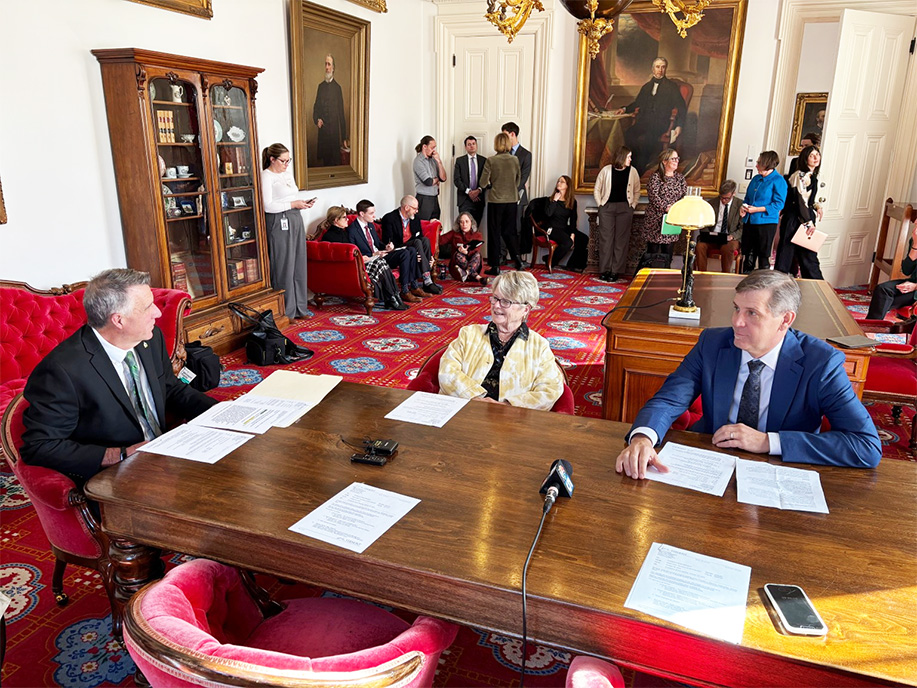
photo by Theo Wells-Spackman, VTDigger
Vermont is one of only a few states moving in recent days to temporarily step in and replace the loss of federal funds, which Scott said he was “surprised to learn.”
“I think we’re doing it right,” he said.
Virginia and Louisiana are among states who appear to be funding an alternative food assistance solution, despite the USDA having advised states that self-funded measures to continue dispensing SNAP will not be reimbursed by the federal government.
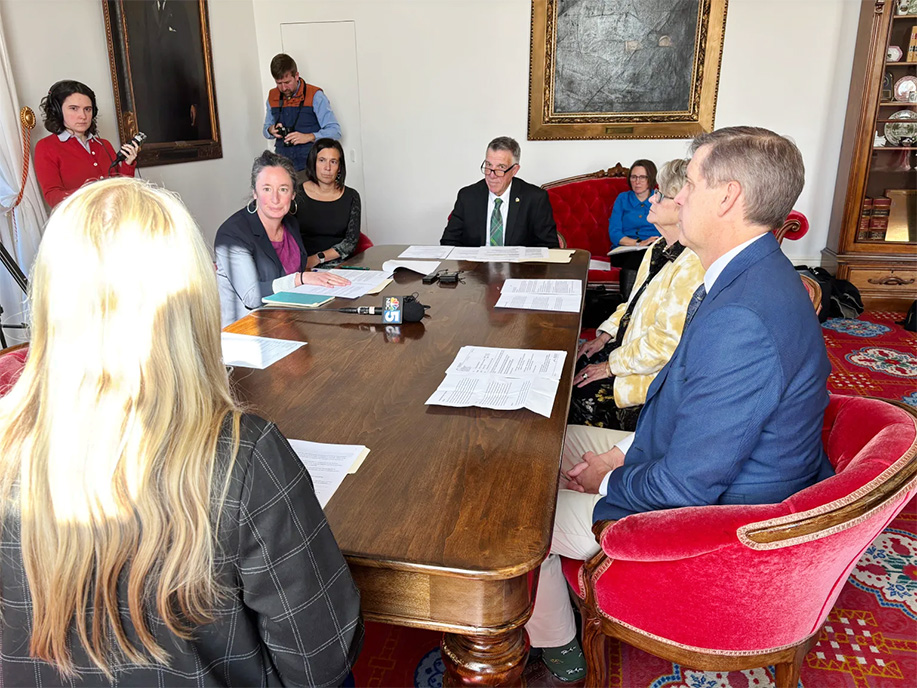
photo by Theo Wells-Spackman, VTDigger
The claim that no federal funds are available has been contested, both by Vermont’s congressional delegation and by state Attorney General Charity Clark, who on Tuesday joined a multi-state lawsuit against President Donald Trump’s administration demanding the USDA release contingency funding for the program.
Officials estimated that extending food stamp coverage for half the month will cost the state roughly $6.2 million, assuming that roughly 38,000 households across the state enroll. Technical support and outreach costs will add up to an additional $100,000, they said.
Those benefits should be available to participants “on or before November 7,” according to documents provided by the Scott administration. In view of this expected delay, the state will provide the Vermont Food Bank with a supplemental one-time grant of $250,000 to assist in meeting increased need.
John Sayles, the Food Bank’s CEO, said Wednesday that the funding will go directly to the organization’s local partners, so that individual pantries can stock up on food. Just $250,000 may not be truly sufficient to meet the need if state funding doesn’t come through until November 7, he said.
But nonetheless, Sayles said, “it’s something, and we’re grateful that the legislature and the Governor recognize that.”
Scott said after the meeting that he had been worried about the financial outlay while preparing his response, and had advocated caution in deciding how much of the full monthly nutritional benefit the state would front right now.
Sen. Andrew Perchlik, D/P-Washington, who serves on the Emergency Board as the head of the Senate Appropriations Committee, called Wednesday’s solution “a good compromise.”
Perchlik said he would likely support two additional weeks of full coverage if the state finds itself in the same situation in mid-November. The Emergency Board will reconvene on or before Nov. 13, should the federal shutdown continue.
Rep. Emilie Kornheiser, D-Brattleboro, who chairs the legislature’s Joint Fiscal Committee and sits on the Emergency Board, said Wednesday she and her colleagues are taking this issue “a month at a time,” at present.
Kornheiser has also been active in working to ensure that the federal Low Income Home Energy Assistance Program, or LIHEAP, is available to Vermonters as the temperatures fall next month.
“People need to heat their homes,” Kornheiser said. “It’s getting really cold.”
Scott affirmed the importance of the heating program, calling its funding “easy” to sign off on. The Governor also said he was “confident” the state will receive federal reimbursement for the program.
LIHEAP dispersal has already been approved by the Vermont Legislature, which eases the process of providing interim support. Heating benefits will be available to Vermonters on a normal schedule “in anticipation of federal spending,” Kornheiser said. It’s a move with plenty of precedent in Montpelier, she added.
While a state-funded SNAP stopgap is much more unusual, Kornheiser emphasized the state’s lack of alternatives.
“I’m really pleased that we’re able to fully fund the program so that Vermonters can get the food that they need,” she said.
“This (shutdown) is being used as a political tool by both parties,” Scott said. “It’s unfortunate that they can’t come together and figure this out.”
In a press conference on Wednesday, U.S. Sen. Bernie Sanders, I-Vt., called the Trump administration’s actions in relation to SNAP “unbelievable.”
“The president is legally obligated to use this emergency fund,” Sanders said, referring to the same contingency funding Clark sued for on Tuesday. He also said that a bipartisan bill co-sponsored by U.S. Sen. Peter Welch, D-Vt., which seeks to release funds for the USDA to continue operating SNAP without interruption, should “get to the (Senate) floor immediately” for a vote.
Theo Wells-Spackman is a Report for America corps member who reports for VTDigger.


