
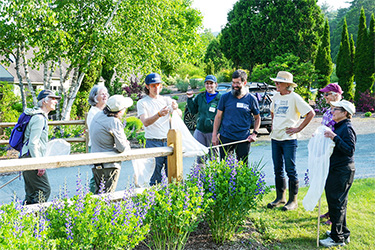


VERMONT – A decade-long study published in the journal Northeastern Naturalist this month found that 352 wild bee species call Vermont home, with 60% of those species likely in need of conservation action.
The study, led by researchers from Vermont Center for Ecostudies (VCE,) in collaboration with the Vermont Fish & Wildlife Department (VFWD), and experts from across the continent, provides the first comprehensive faunal list and conservation assessment of Vermont’s wild bees.
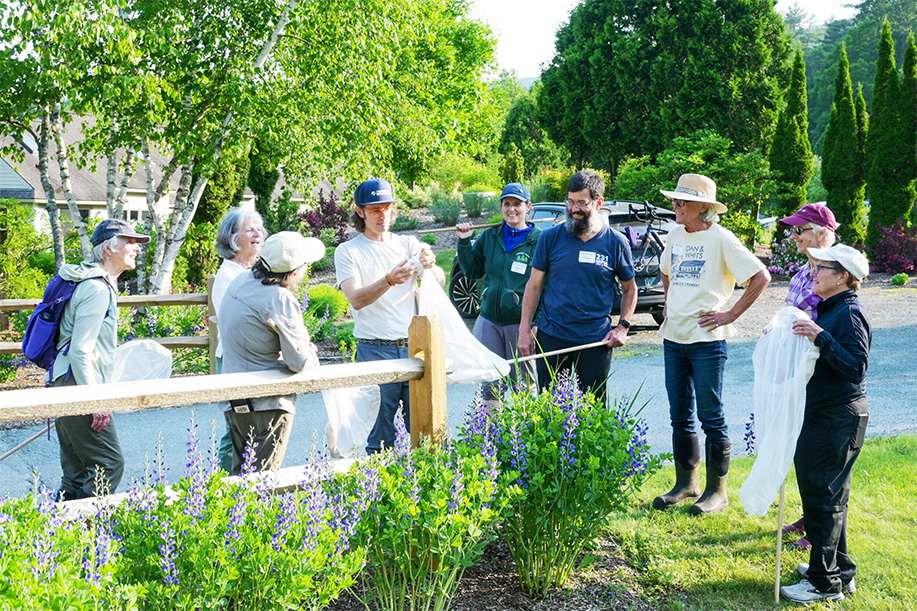
photo by Alden Wicker
“Thanks to the efforts of thousands of Vermonters, we’ve learned an incredible amount about the status of wild bees in Vermont,” said Kent McFarland, a co-author and director of VCE’s Vermont Atlas of Life. “But it will take strong collaborations between biologists, public agencies, conservation organizations, land owners, land managers, and even beekeepers for us to conserve Vermont’s diverse wild bee fauna effectively now and for future generations.”
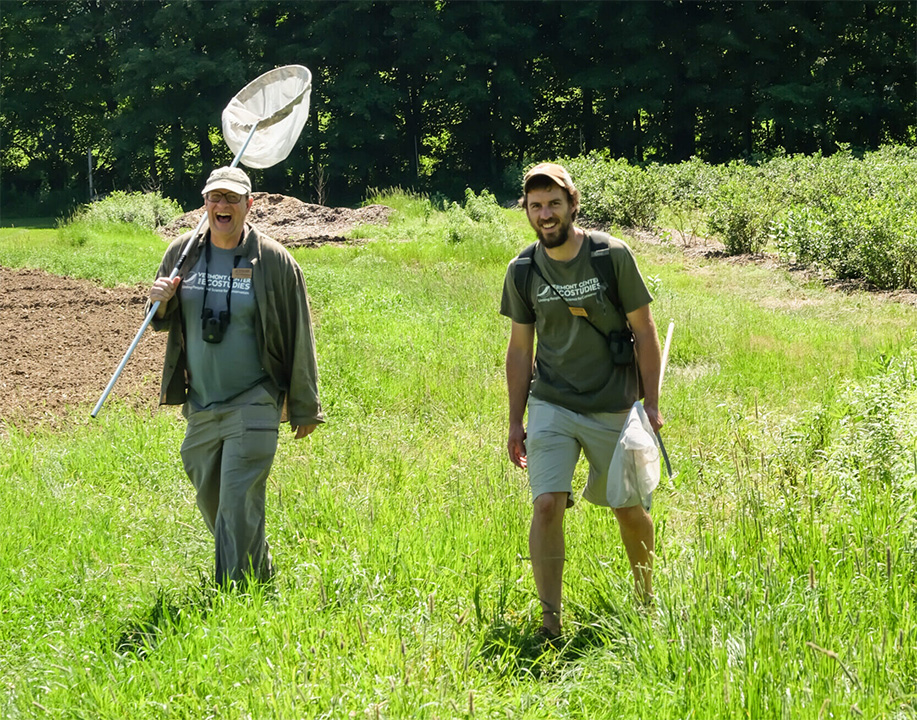
photo by Alden Wicker
The last checklist of bee species found in Vermont was published more than 60 years ago in 1962, and included only 98 species of bees, with little to no information on their abundance or geographic distribution.
“This lack of information on a crucial and beloved group of pollinators has hampered efforts to protect and conserve wild bees, which are important parts of Vermont’s natural ecosystems and agriculture,” said lead author Spencer Hardy, a bee expert at VCE. “Much has been uncovered about the challenges facing the non-native Western Honey Bee, Wild bees face many of the same problems, and likely others that aren’t as well understood.”
Acquiring the bee records for this study was no small feat. For over a decade, the authors and a corps of over 2,500 volunteer community scientists searched across the entire state. Additionally, the scientists combed through historical museum and private collections containing thousands of specimens, carefully verifying the identification and digitizing each specimen. Altogether, they amassed a database exceeding 79,000 individual encounters with wild bees from all of Vermont’s counties and biophysical regions, shared as open access data at VCE’s Vermont Atlas of Life and the Global Biodiversity Information Facility.
“We recruited and trained community science volunteers to find, photograph, and share wild bee encounters to our iNaturalist Vermont project,” said Hardy. “Which now make up the majority of scientific records of wild bees in Vermont, and it keeps growing.”
Some observations uploaded by community scientists to iNaturalist.org were remarkable, including a male Ground Cherry Sweat Bee (Lasioglossum pectinatum), and the first state record of Mock-orange Scissor Bee (Chelostoma philadelphi),
The study discovered nine species previously unreported in New England, several species not regularly found elsewhere in New England, and as many as 24 novel host-parasite bee relationships. Vermont now has the largest list of known bee fauna of the northern New England states, not far behind recent studies in Connecticut and Massachusetts.
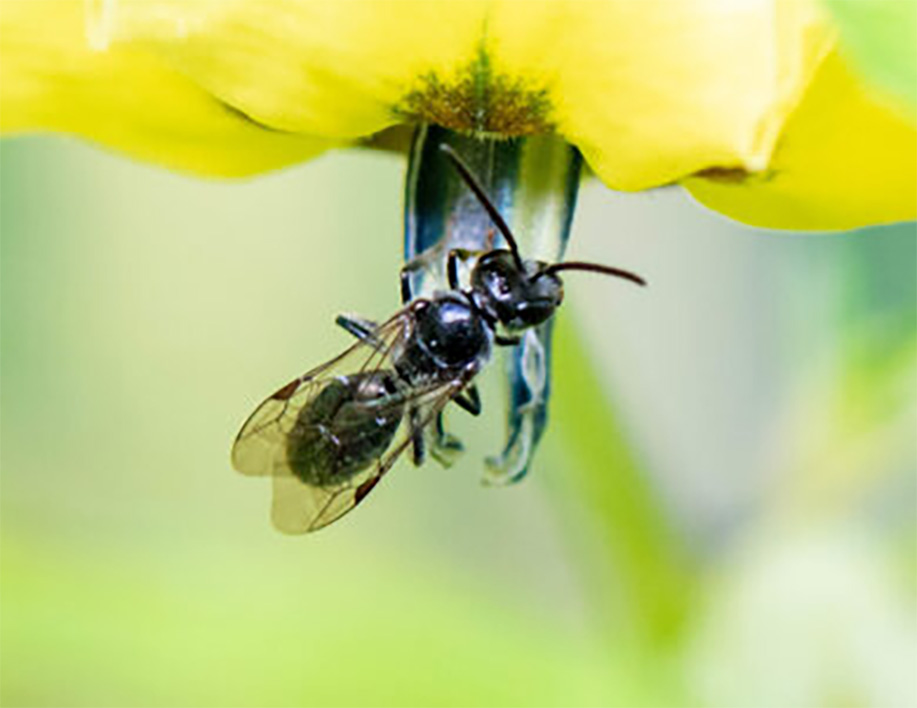
photo by Lisa Cass on iNaturalist
While most Vermont species present in 20th-century collections are still found in Vermont today, their mere presence doesn’t indicate a stable wild bee population. Historical sampling was inadequate for documenting rare species that may have once occurred within the state. Conservation rankings from this study indicate that as many as 60% of the bee species in the state are vulnerable, while 37% are critically imperiled or imperiled.
For example, consider charismatic bumble bees. Comparing the 10,000-plus records from the Vermont Bumble Bee Atlas led by Vermont Center for Ecostudies between 2012 and 2014 to historic specimens from public and private collections revealed large changes in species diversity, richness, and abundance. Most noteworthy is the drastic decline of the once common Rusty-patched Bumble Bee (Bombus affinis), which is now state and federally endangered and has not been reported from Vermont since 1999.
While most Vermont species present in 20th-century collections are still found in Vermont today, their mere presence doesn’t indicate a stable wild bee population. Historical sampling was inadequate for documenting rare species that may have once occurred within the state. Conservation rankings from this study indicate that as many as 60% of the bee species in the state are vulnerable, while 37% are critically imperiled or imperiled.
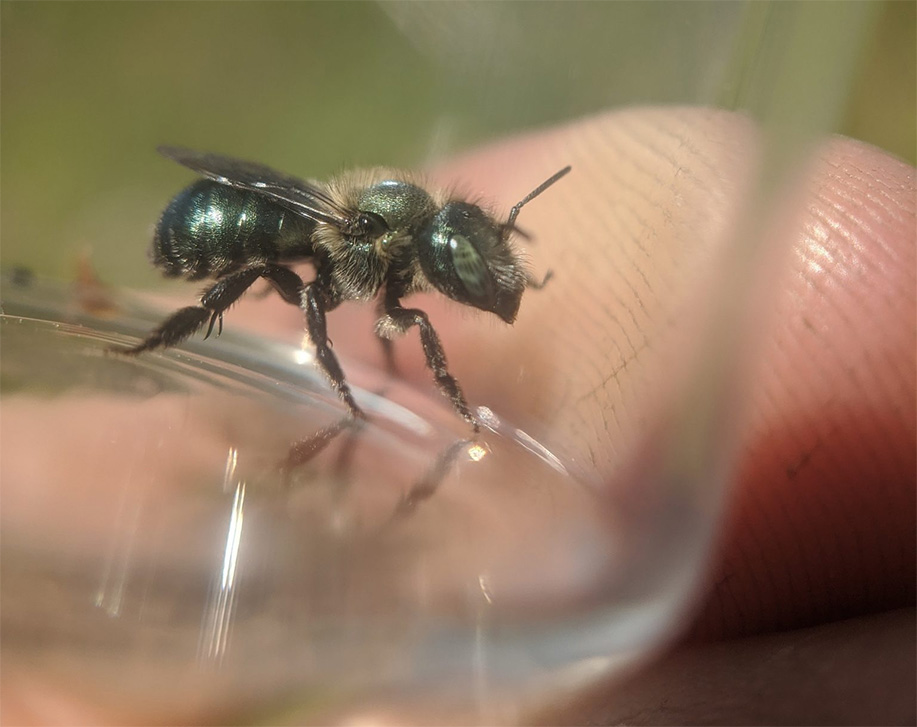
photo by Lisa Cass on iNaturalist
For example, consider charismatic bumble bees. Comparing the 10,000-plus records from the Vermont Bumble Bee Atlas led by Vermont Center for Ecostudies between 2012 and 2014 to historic specimens from public and private collections revealed large changes in species diversity, richness, and abundance. Most noteworthy is the drastic decline of the once common Rusty-patched Bumble Bee (Bombus affinis), which is now state and federally endangered and has not been reported from Vermont since 1999.
“The vital functions that bees and other pollinators perform across Vermont’s landscape are becoming well recognized by the public,” said VFWD biologist Mark Ferguson. “This study identified our most vulnerable bee species and should encourage the development of management strategies to ensure populations remain robust and viable.”
Volunteer community scientists, naturalists, gardeners, farmers, or anyone with a fascination with bees are encouraged to continue to contribute to this scientific effort. Though bees are more difficult to identify than other wildlife such as birds, about 60% of Vermont bee species are identifiable from clear photographs of live bees, and this number may grow as additional field-based traits are discovered and tested. These records can help track the spread of exotic bee species, and help biologists learn more about habitats and locations as well as the phenology (or seasonal patterns, such as spring emergence) of wild bees. For gardeners who wish to support native Vermont bees, the study includes a detailed supplement that lists the plant species each species was observed visiting.
The study by Spencer P. Hardy, Michael Veit, Joan Milam, John S. Ascher, Nathaniel Sharp, Michael T. Hallworth, Mark Ferguson, Leif Richardson, Charlie Nicholson, Taylor H. Ricketts, Jason Gibbs, and Kent P. McFarland (2025). An Annotated Checklist of the Bees (Hymenoptera: Apoidea) of Vermont with Conservation Status and Natural History Notes. Northeastern Naturalist 32(Monograph 27): 1-73.


