
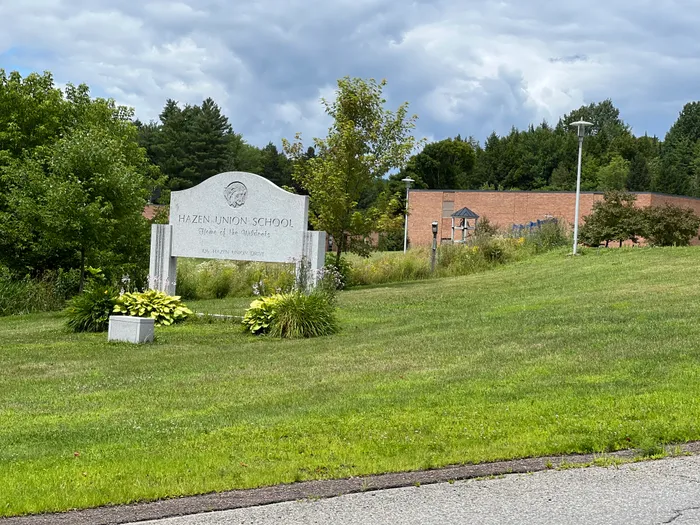



HARDWICK – As the new year begins, our communities’ volunteer school boards are hard at work revising budgets for the coming 2026-2027 school year. We appreciate their tireless efforts towards this difficult task. As daily costs are rising, we recognize the real strain that property taxes place on households. We also appreciate that the expense of education is an investment in these very communities, their current well-being and their futures. Our school board members face a difficult balancing act, working to preserve these essential institutions without placing too great a financial burden on those who benefit from it.
At its most recent meeting (December 15, 2025), the Hazen Union School Board, at the recommendation of Principal Jason Di Giulio, tentatively approved Reductions in Force (RIFs) that would eliminate seven teaching positions. While we understand that the Hazen Union budget needs to be under a certain dollar amount to avoid tax penalties, we are alarmed to see these student-facing roles on the chopping block, while administrative roles were untouched in the proposed budget.
At this juncture, we urge the Hazen board to reconsider, and construct a budget that will mitigate direct impact on our students by managing costs in ways other than cutting the school staff they interact with on a daily basis.
The proposed cuts of a math teacher, an English teacher, a global citizenship teacher, a science teacher, our only French teacher, our only technology integrationist and our work-based learning driver, would dramatically harm Hazen’s culture and learning environment.
Losing this significant portion of our staff would counteract years of effort to ensure our students can access learning experiences that are rich, engaging, and equitable with those of students across the state.
These staffing changes would not only destabilize student learning opportunities, they would have a massive impact on the culture in which our students thrive.
In recent years, Hazen Union has prioritized expanding robust elective offerings at the high school level in order to ensure our students can access learning experiences that are equitable with those of students across the state. In spite of these efforts, the reality is that our core subject instructors (math, science, English and global citizenship) are already operating beyond sustainable capacity. The loss of a teacher in each of these departments will result in the elimination or significant consolidation of remaining electives, or in some cases potentially even cutting graduation-requirement courses.
There is a great deal of nuance in the complexities of building a viable master schedule for middle and high school that offers all students sufficient learning pathways to meet their diverse academic needs.
This challenge will only be compounded by the loss of a teacher from each core department. Three of the four core positions impacted by the proposed cuts are middle school teachers.
In addition to slashing options for course offerings at the high school, these reductions would mean the loss of the middle school’s current teams-based teaching model. Our seventh and eighth grade teams foster culture-building and social-emotional learning; support rising seventh graders in the transition from elementary school to Hazen; and are rooted in best practices as defined by current education research. They have been a model of excellence within our school, and uplift our students through some of the toughest years of growing up.
The other positions at risk of being cut all bring just as much value to Hazen’s students, in a host of delightfully specific ways: Our French program connects a significant portion of our students with their family heritage and has opened the doors to international experiential education, allowing students of all socioeconomic backgrounds to learn in Montreal and Paris. Building language and intercultural opportunities are critical ways in which our school seeks to meet its mission to empower students “to achieve their full potential and become successful, responsible, and contributing members of society, locally and globally.” World Language learning improves cognitive function and skills, supports literacy in a learner’s first language, and fosters intercultural skills that improve interactions with all neighbors of diverse backgrounds and perspectives. The French program has been critical, as half of the World Language department, in making Hazen a school where every student pursues biliteracy. All Hazen middle schoolers learn a language other than English. Through third, fourth and fifth-year study, students prepare for and have achieved the Vermont Seal of Biliteracy, an endorsement added to their Vermont High School Diploma that is portable to academic and professional contexts.
The technology integrationist has filled a crucial gap at Hazen in the last two years, not only supporting every teacher in their ability to interface with learning management software and classroom technology, but teaching middle school tech classes that have given Hazen students the real-world tech skills they need to thrive in school and beyond.
The computers class has supported learning across all subjects, empowering students to effectively navigate the technology embedded in all of their classes, while media expo introduces students to practical applications of modern technology including 3D design and covers important topics such as the impacts of AI in school and at large. Separating this work from the equally essential role of the librarian has been a proactive shift at a time when literacy scaffolding is so greatly needed, maximizing direct literacy support for the students who need it most.
Hazen’s work-based learning program is a centerpiece of our flexible pathways program, and offering reliable transportation as a piece of that program has enabled more equitable access to it, allowing students to take on professional opportunities without weighing their ability to drive themselves there as a factor.
The most direct impact of these staffing cuts would be a loss of diverse offerings at Hazen; from there, we can expect the growth of existing inequity to accelerate, with better-resourced families choosing to send their children to better-resourced schools and Hazen’s student body continuing to dwindle. The reality is that every adult who works directly with students at Hazen plays a unique and important role in the education of our community’s young people – acting as mentors, broadening horizons, and ensuring our students gain access to the learning opportunities they deserve.
As budget drafts are finalized across our Supervisory Union, we urge boards to look closely at expenses other than the adults who spend their days directly interfacing with students.
While there is a possibility that Hazen will need to meet class-size minimums in the years ahead, those policies have not yet been finalized and are years from enforcement, and we do not yet know what flexibility may be available to a school of our size and in our rural location, especially as long as we remain a school whose students are thriving.
The intent behind Act 73 is rooted in the consideration of administrative costs, and we encourage our school board to look closely at the proportions between administration and student-facing staff.
In the face of Act 73, the proposed cuts to instructional staff would shake Hazen’s foundation, making our community more vulnerable to losing its school entirely in the years ahead. We need to fortify our schools against pending legislation by preserving robust, diverse and academically rigorous learning experiences for our students, scaffolded by lean, efficient administrative support.


