
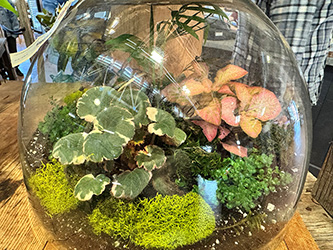


NORTH ADAMS, Mass. – While indoor gardening helps stave off post-holiday blues and cabin fever, windows providing full sun can be scarce. Light stands take up needed space, so a gardener can build a dish garden.
Dish gardens are collections of plants sharing a single container. Terrariums are enclosed dish gardens.
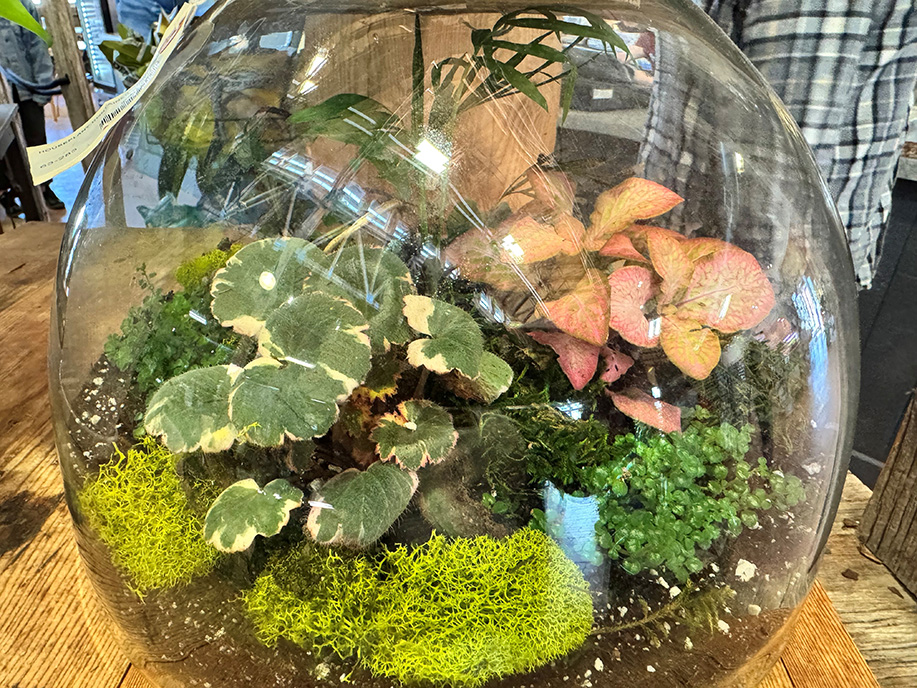
photo by Debra Heleba
To build a dish garden, select a container deep enough to hold a few inches of soil. It can be a shallow ceramic pot and matching saucer or a decorative casserole dish that’s no longer used in the kitchen. An old gallon pickle jar, an unused aquarium, or any glass container with a lid can become a terrarium.
When using a container without a drainage hole, you’ll need to take extra care that the plants’ watering needs are met without overwatering. Accumulation of excess water can lead to root rot. For containers with drainage, use a light potting mix. For terrariums and containers with no drainage, start with a layer of gravel. Add a thin layer of activated charcoal to help prevent bacterial growth. Finish with a few inches of light potting mix.
Select plants that share the same requirements for light, water, and humidity. They should be slow growing and naturally small in size. Terrarium plants should also be suited to an environment with high humidity.
Humidity-loving plants like miniature African violets (Saintpaulia), polka dot plant (Hypoestes phyllostachya), and button fern (Pellaea rotundifolia) do well in terrariums. Cacti and succulents are best suited for open dish gardens. If you’ve fallen in love with a glass container but the plants you want to use prefer a dryer environment, leave the lid off to allow moisture to escape.
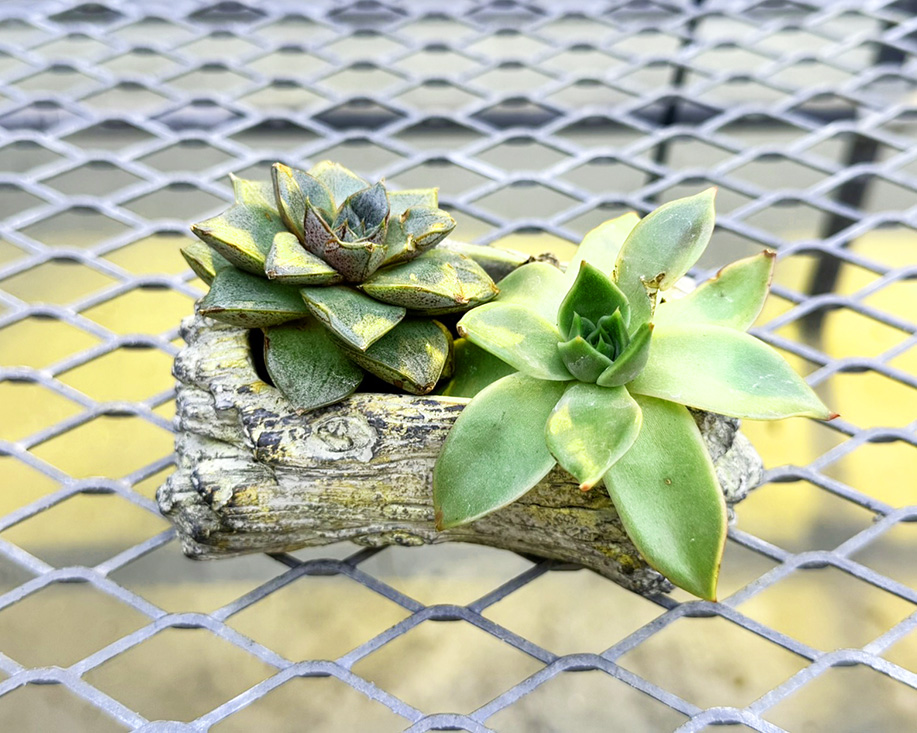
photo by Debra Heleba
Now comes the fun part: designing and planting your miniature garden. Use a piece of paper or cardboard cut to the dimensions of the planting area to layout your intended design. Be sure to allow room for any embellishments to include.
Depending on the container, a spoon may be needed for planting. If building a terrarium in a glass container that’s deep or has a small opening, attaching a spoon to a dowel makes reaching the soil easier. Kitchen tongs can help position plants.
Once plants are in place, consider adding pebbles, aquarium gravel or colored sand. Tiny figurines or other decorations can add interest to a miniature landscape.
Finally, give plants a drink of water. Because terrariums are enclosed, they won’t lose much moisture from evaporation, so water sparingly, adding it by spoonfuls to the soil to achieve desired moisture levels.
Place dish gardens in a well-lit location. Depending on the plants selected, this could be in or near a sunny window or under a grow light. Terrariums should never be in direct sun.
A terrarium won’t require much maintenance. Depending on how airtight the lid is, it may be months before water is needed. Some pruning can maintain the size and structure of the plants. Always remove any dead or damaged foliage.
A dish garden will require more attention. In addition to watering, pruning can help maintain the plants’ size and shape. If they become overcrowded or outgrow the container, consider removing and repotting them.

Deborah J. Benoit
Deborah Benoit is a UVM Extension Master Gardener who volunteers as a garden columnist and for Bennington County Extension Master Gardener Chapter activities.


