

SILVER SPRINGS, Md. – As we near the 250th anniversary of the signing of the Declaration of Independence, conversations are taking place throughout the United States about the meaning of this event. How should we mark the occasion?
Museums and historical societies have a particularly important role to play in this conversation. On rainy days, we may have taken our families to visit the Fairbanks Museum and the Athenaeum in St. Johnsbury or the Vermont History Museum in Montpelier.
Have you, perhaps, had the opportunity to visit the monuments and museums in Washington, DC? These visits raise probing questions and spark vital conversations.
I’m fortunate to have two homes: Silver Spring, Maryland, just outside Washington, DC, and Greensboro. Every year, during spring break season, I take pleasure in observing the many families and school groups visiting my favorite museums on the National Mall, even as the crowding may keep me from getting close to an exhibit. How we tell the story of the places we call home shapes how we engage with our communities: in local, state, and national elections; in school board and PTSA meetings; and in town meetings.
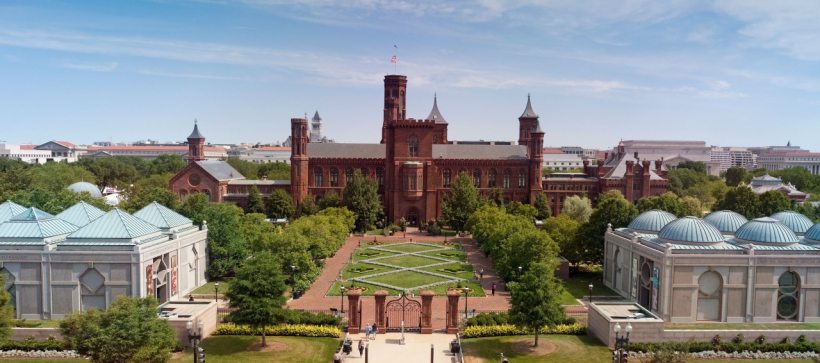
Telling the story of the United States is the work not only of local and state historical museums and societies, including the one I know well in Greensboro, but also of our nation’s largest complex of museums, the Smithsonian Institution. The Vermont Historical Society lists over 190 local history museums in Vermont alone from one-room exhibits to building and grounds complexes such as the Old Stone House and Village in Brownington. The Smithsonian Institution includes 21 museums and the national zoo as well as research facilities around the world and local affiliates in all fifty states.
This is a mutual story, a conversation, told by our local museums and our national institutions. The Smithsonian Institution links to affiliate museums across the country, including the Sullivan Museum and History Center at Norwich University; hosts traveling exhibits; and sponsors local exhibitions in small towns. This summer in partnership with the Vermont Humanities Council, the Smithsonian Museum on Main Street program will sponsor exhibits in three small rural communities, Bellows Falls, Barnet, and Swanton, focusing on local invention and innovation.
Now this conversation among our museums, national, state and local, has become imperiled. Our story is best told by us: community members, school students and their teachers, historians, and artists, not by political parties, not by politicians, not by the President, who seeks to usurp our stories. At his direction, the National Park Service has been editing its signage for almost a year now, and the threat hangs over the Smithsonian Institution as well. Here in Maryland it’s easy for me to visit battle sites of the Civil War, Gettysburg and Antietam, and Philadelphia for the creation of these United States. There it has taken a judge to stop the destruction of signage documenting George Washington’s slaves. How will the story of the Civil War and its aftermath be revised?
Here in Washington, D.C., we have already witnessed the destruction of the East Wing of the White House and the desecration of the Kennedy Center. Will the Smithsonian be next?
The White House has threatened to launch an effort to fire Lonnie G. Bunch III, who has served as the 14th Secretary of the Smithsonian since 2019. Lonnie Bunch, the only historian ever appointed to lead the Smithsonian, has devoted most of his long career to the Smithsonian and to telling the story of our country. He led the creation of the National Museum of African American History and Culture and has provided steadfast and effective leadership to the overall Institution through profoundly difficult periods, the COVID pandemic and shutdown, the assault on the Capitol, and now the second Trump presidency.
The Smithsonian has always been here for us; now the Smithsonian needs us to be here for it. The next meeting of the Smithsonian Board of Regents takes place in April. Please join your voice with mine. Write to the Board of Regents in support of the Smithsonian and Lonnie G. Bunch’s leadership. Tell them why you care and why we need the Smithsonian Institution to safeguard our story: our history, our culture and economy, our science and our art.
Office of the Regents, Smithsonian Institution, PO Box 37012 MRC 050, Washington, DC 20013-7012
Or by email: Porter N. Wilkinson, Counselor and Chief of Staff to the Board of Regents, [email protected]
Kate Forester, Deputy Chief of Staff to the Board of Regents, [email protected]
Mallory Gianola. Special Assistant, [email protected]
Francy HaysSilver
Spring, Md. and Greensboro


