


SOUTH BURLINGTON – many home gardeners are looking for ways to repurpose some turfgrass into perennial beds.
The easiest and most efficient way to accomplish this is to use the sheet mulching method.
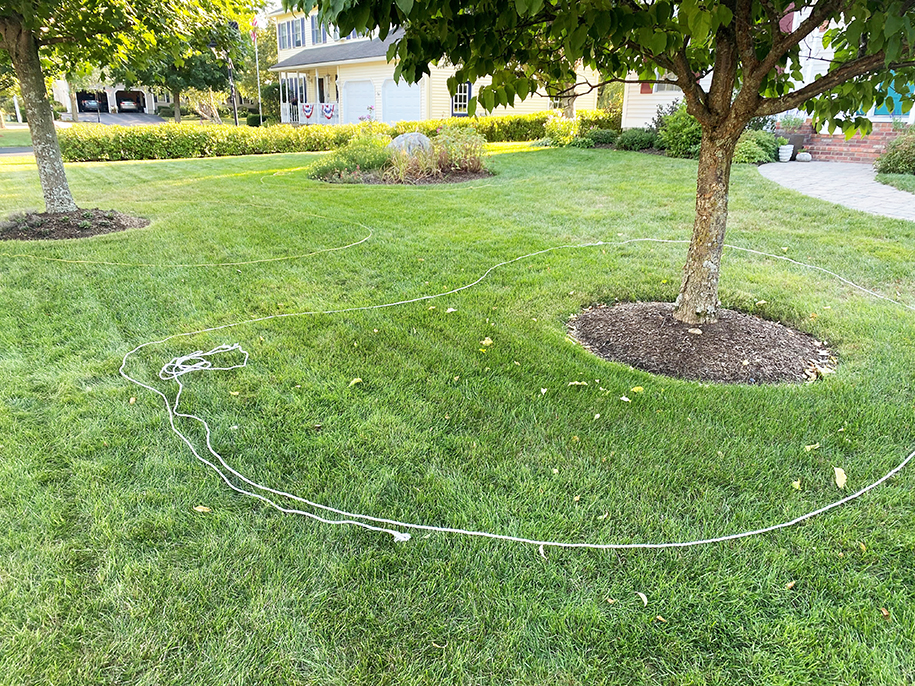
photo by Amy Simone.
Sheet mulching does not use any chemicals, employs sustainable materials, naturally reduces weeds and maintains moisture, all while improving soil quality. The process involves smothering the undesired sections of grass with cardboard and mulch, which break down over about four to six months, after which time you can plant directly into it.
The following lay out steps to help convert lawn area to garden.
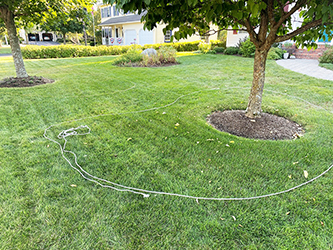
Step 1: Shape it. Give the bed the desired shape and prepare it for mulching. For a curvy shape, a garden hose or thick rope work well to lay out and reshape until you are happy with the design. Linear beds can be marked using stakes and a tape measure.
Once the shape is established, use landscape paint (available at the hardware store) to set a design. Cut the grass with a mower as short as possible inside the demarcated area.
Step 2: Dig it. Create an edge around the new garden bed. Using an edging tool or flat garden spade, dig the edges four to six inches deep at a 45° angle from both the inside and outside of the perimeter. This will create a V-shaped “channel” with a 90° angle at the bottom. As you dig out the edges, spread the removed turf on top of the remaining grass inside the new bed area. Once finished, water the turf.
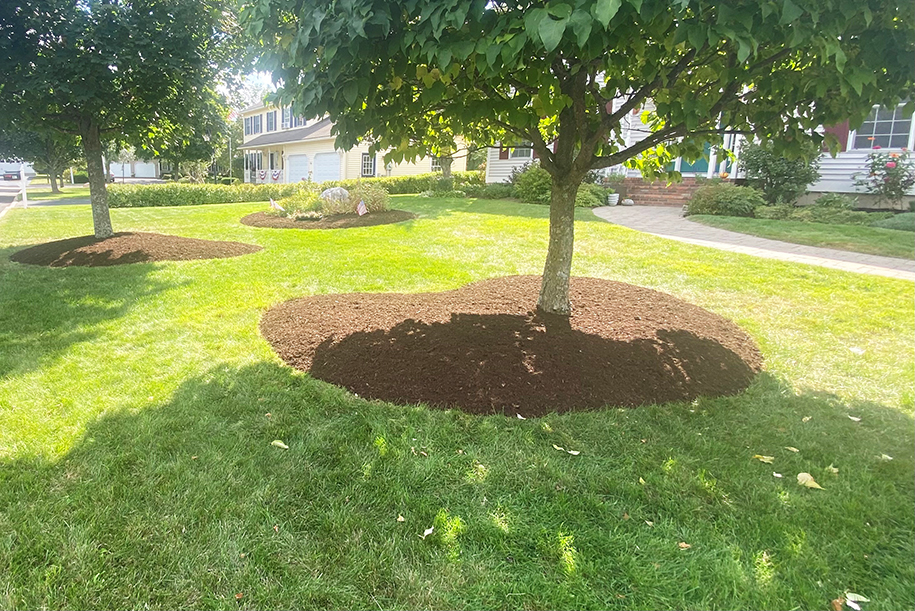
Step 3: Mulch it. Use corrugated cardboard, taking care to remove any tape or staples. Cut the cardboard pieces to fit the shape of the bed. You can also use 10 sheets of regular (not glossy) newspaper. Be sure to overlap the cardboard or newspaper by 8-10 inches and not leave any gaps of open turf. Tuck the edges of the paper material into the edge channel.
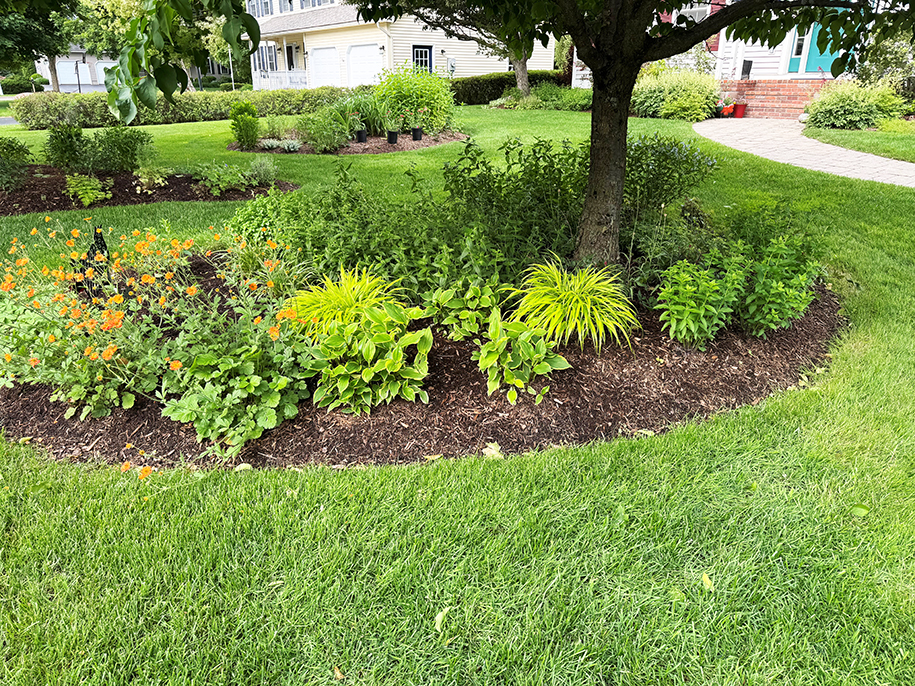
photo by Amy Simone.
Wet down the paper material periodically to keep it in place and to start the decomposition process. Add a layer of natural mulch on top of the paper material, watering as you go. Good mulch choices include pine needles, dead leaves, grass clippings, bark mulch and wood chips. Do not mulch with any materials that contain herbicides, pesticides, or dyes.
The ideal depth of the mulch is four to six inches with deeper beds for planting annuals and vegetables. Use any combination of mulch materials as desired to arrive at the desired thickness. Adding a final layer of bark mulch on top can be especially useful in suppressing weeds (and makes the bed a bit more attractive) while you wait for your new bed to be ready for planting.
When it is time to plant into the new bed, scrape away the mulch where to ensure that plants will be set into the soil. Add bulk soil for a thicker, more raised-bed look.
Whether it’s a band of wildflowers between a yard and the road, a rock garden between two trees, or a bed of pollinator-attracting native perennials to draw wildlife in, once sheet mulching is comfortable, the possibilities for converting turf to gardens will be endless.
Amy Simone is a UVM Extension Master Gardener volunteer from South Burlington.

Amy Simone
Amy Simone is a UVM Extension Master Gardener from South Burlington.


