
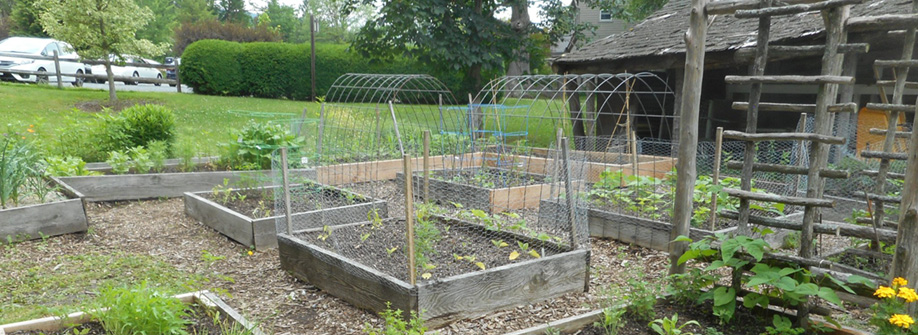


NORTH ADAMS, Mass. – In springtime, a gardener’s thoughts turn to planting and all that goes along with it. Plant supports might come as an afterthought, but they’re often the hidden heroes in the garden.
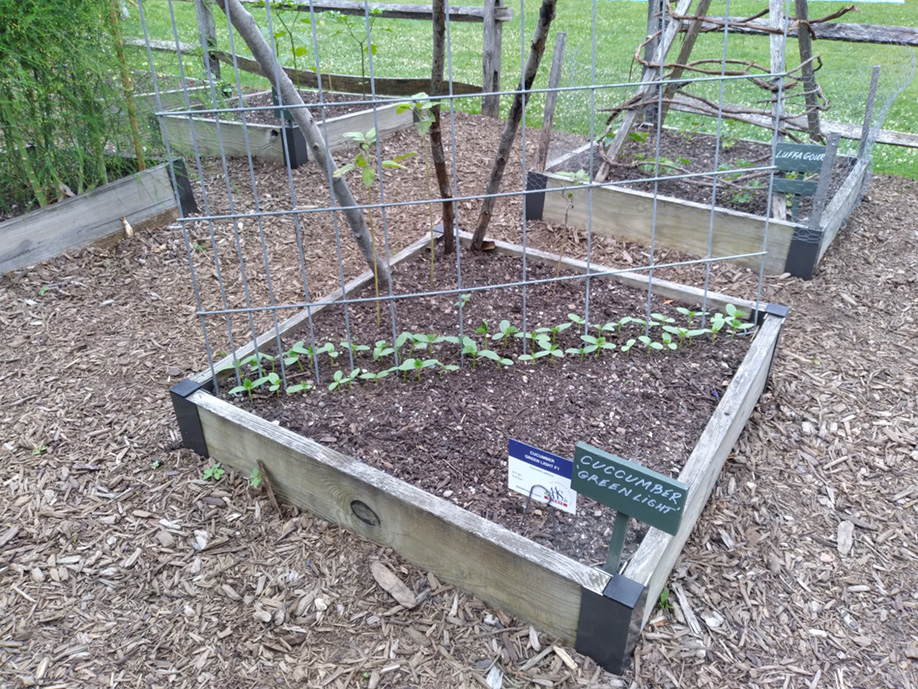
photo by Deborah J. Benoit
While many plants have strong stems and can stand up on their own, others, particularly those that are vining or which produce fruits and vegetables, do better with a little help.
Metal or wooden supports can guide plants such as passionflower (Passiflora incarnata) to create visual impact without becoming unruly. In the vegetable garden, plant supports keep enthusiastic growers like tomatoes (Solanum lycopersicum) contained. They can help keep fruit off the ground and heavy flowerheads from breaking their stems.
Arbors and trellises add structure and are decorative elements. They can also add valuable planting space and increase garden yields by training plants to grow up rather than across the soil. Keeping foliage and fruit off the ground can result in healthier plants by improving air circulation and reducing contact with soil-borne pathogens.
Plant supports can be purchased or homemade. They can be as simple as tying a plant to a wooden stake driven into the ground or as elaborate as a cage constructed out of woven wire.
Consider what type of plant support will function best for the plant you’re growing. A support that’s too small can easily be broken or tipped over as a large plant matures or produces a plentiful crop.
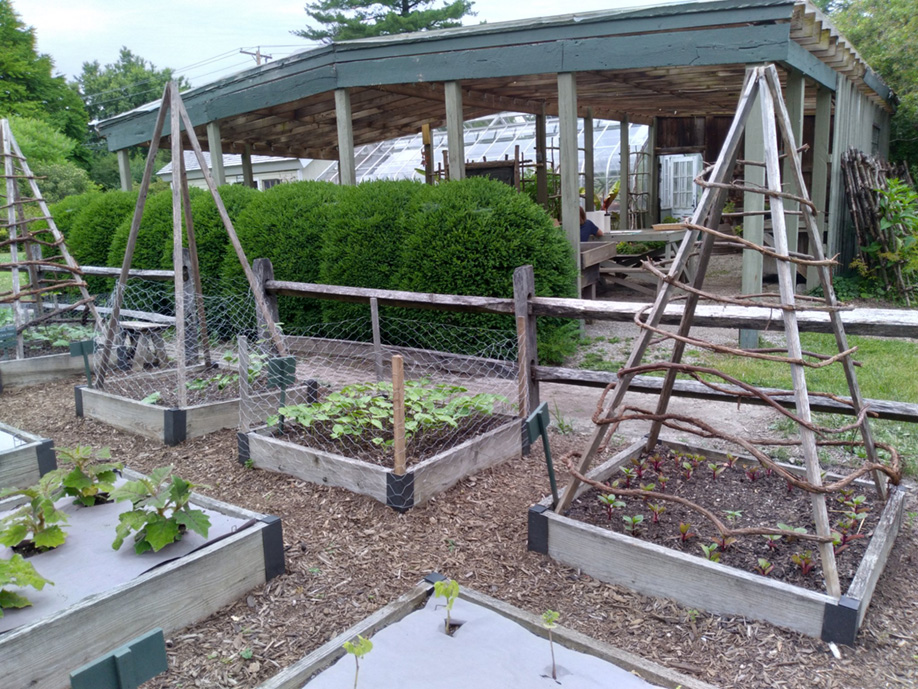
photo by Deborah J. Benoit
A simple stake might be best for crops with a central stem, while others can be better served by a small cage-type enclosure. For example, for indeterminate tomato plants, with their vining habit and long-term production of fruit, consider a larger, sturdier support. Be sure it will allow sufficient air circulation and that you can easily reach inside to harvest as fruit ripens.
Large supports, such as arbors or trellises, should be installed before planting to avoid damage to roots, stems and foliage. Install smaller supports at the time of planting or as soon afterward as possible. Putting the support in place while the plant is still small allows it to grow into the structure and avoids the risk of breaking stems, foliage, and flowers while attempting to gather wandering plant parts into its framework later.
Be sure the support is placed firmly in the ground to avoid being blown over or pulled down by a plant’s weight. Long garden staples or a stake driven into the ground and attached to its legs can help to secure a plant support in place, if needed.
Plants like cucumbers (Cucumis sativus) have tendrils which can attach to the support. Tie other plants in place loosely to avoid damaging growing stems.
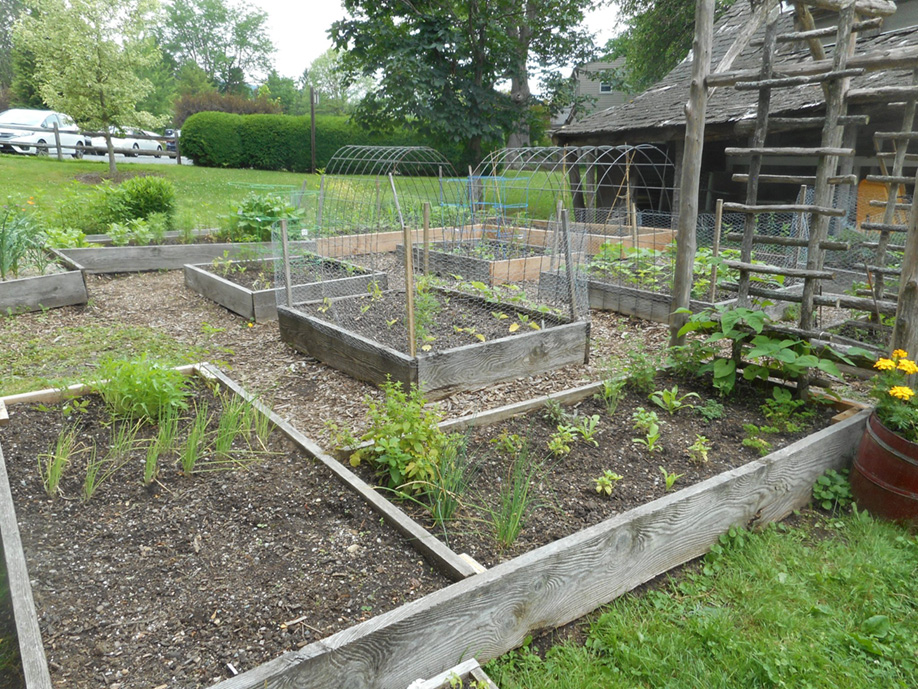
photo by Deborah J. Benoit
When using plant supports in containers, be sure the pot is heavy enough to not topple over and deep enough to sink the legs of the support fully into the soil. In elevated beds, embrace vertical gardening with plants that hang over the edge or climb up supports. Again, be sure the soil is deep enough to cover the plant support’s legs for stability. Woven wire fencing can be bent into an arch and secured to opposite sides of wooden raised beds, allowing vining crops to grow over the arch and fruit to dangle inside for easy harvesting.
Consider using plant supports in your garden this year for healthier plants, increased harvest, and a more decorative garden.
Deborah Benoit is a UVM Extension Master Gardener living in North Adams, Mass., who volunteers as a garden columnist and participates in Bennington County Extension Master Gardener Chapter activities.

Deborah J. Benoit
Deborah Benoit is a UVM Extension Master Gardener who volunteers as a garden columnist and for Bennington County Extension Master Gardener Chapter activities.


