


WHITE RIVER JUNCTION – With each spring comes a renewed need to be vigilant for ticks.
Over the past several decades, many tick populations and the pathogens they carry have expanded globally, driven by climate change, land-use shifts, and growing host populations.
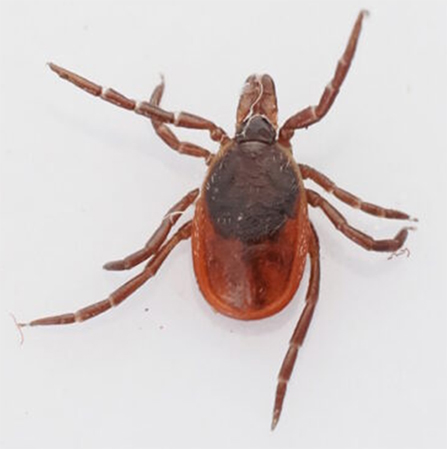
photo by Quillipede
In New England, we are now at the leading edge of that expansion. Warmer year-round conditions are allowing ticks and other species to move northward and upslope, while also making the region increasingly suitable for species introduced from elsewhere. They are one visible part of a much broader ecological shift.
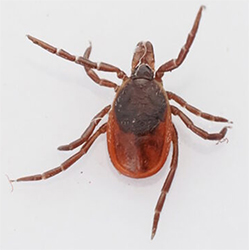
While Black-legged Ticks (“deer” ticks, which can transmit Lyme disease) have been present in New England for perhaps a century, their North American range has more than doubled since the 1990s, advancing northward at approximately 20 miles per year. These expansions are not uniform or gradual, but rather episodic, with more northward expansion occurring in relatively warm years.
By comparing the genetic signature of ticks across the northern United States and southern Canada, we’re learning that ticks can move hundreds of miles in a day during spring via migratory birds. These movements lead to new populations appearing in scattered patches, gradually filling in areas where ticks were previously absent or in low densities.
Lone Star Ticks, capable of triggering alpha-gal syndrome in humans, were formerly restricted to the southeastern United States, but are now regularly detected throughout the Northeast.
Gulf Coast Ticks, which in some regions have been known to transmit a bacterium that causes a mild form of spotted fever, have only recently colonized New England within the last decade but are appearing with increasing frequency.
The Asian Longhorned Tick, primarily a concern for livestock, was accidentally introduced to New Jersey around 2013. This species has now established populations in our region and is capable of rapid population growth through asexual reproduction. Incredibly, genetic analyses suggest that the entire U.S. population of Asian Longhorned Ticks can likely be traced back to just three self-cloning female ticks that were accidentally introduced from East Asia.
Warming temperatures are only part of the story. Our actions have led to increased forest fragmentation and suburbanization, which have created an environment full of shrubby edges (or ecotones, as we call them) that favor ticks and the animals they feed on, like White-tailed Deer.
These changes have not gone unnoticed in New England. In our two-year Upper Valley Backyard Tick Project, we found that pesticide use for ticks has increased substantially in recent years, with many homeowners turning to routine, monthly yard treatments. That response is understandable given the health risks ticks pose. However, there is no clear evidence that spraying around the home reduces the likelihood of contracting a tick-borne disease. In our study, pesticide applications reduced tick numbers for a short period, but those effects did not last and pollinator populations declined by as much as 30% following treatment.
There are, however, simple and effective ways to reduce your risk from ticks. Wear long pants, tucked into your socks, while walking or working in brushy areas. It’s a nouveau fashion trend that looks great (trust me), and it makes ticks easier to spot before they disappear under your clothing.
For additional protection, consider treating your clothing with picaridin or lemon eucalyptus oil. Check yourself, your children, and your pets regularly while outdoors. At the end of the day, make a full-body tick check part of your nightly routine.
If you find a tick and aren’t sure what species it is, upload clear photos to iNaturalist for identification. For more information, including what to do after a tick bite or whether you need to save a tick for testing, see this page from the Center for Disease Control. These small steps are more effective than trying to control ticks at the scale of your yard.
As you run maple lines or direct-sow your root vegetables this spring, it’s worth considering how differently we respond to species on the move. The northward expansion of Sassafras, Common Pawpaw, and Shagbark Hickory has largely been treated with indifference, ho-hum. Some arrivals are even welcomed: many of us are excited by the prospect of encountering species like Yellow-throated Vireo or Red-banded Hairstreak farther north.
Ticks, of course, elicit a very different reaction, largely because of their direct impacts on human health. But the processes driving their expansion are the same. Across New England, species are shifting their ranges in response to a rapidly changing climate and landscape.
If we look closely, ticks are not the whole story. They are one thread in a much larger pattern of ecological change unfolding across New England.


