
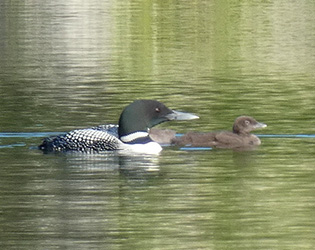
VERMONT – Loons are doing really well in Vermont. It is hard to imagine with all the threats they face that the overall loon population has recovered, for now. Back in 1983, only seven loon pairs nested in all of Vermont. In 2025, the Vermont Center for Ecostudies (VCE) Loon[Read More…]
The Outside Story
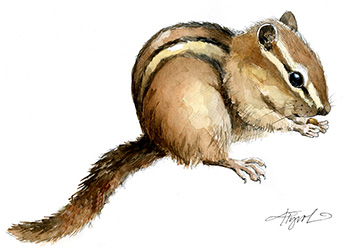
In the footsteps of a chipmunk
SHAWANGUNK, N.Y. – As autumn nears, I find myself returning to botanist Robin Wall Kimmerer’s line in “Gathering Moss” where she describes ecological succession as “a tale of the interwoven fates of mosses, fungi, and the footfall of chipmunks.” The phrase evokes the quiet, entangled choreography of life in transition.[Read More…]
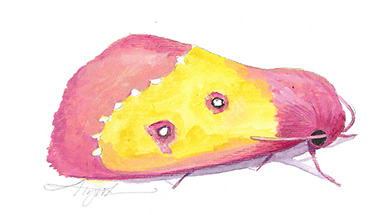
Finding the Pink Star Caterpillar
DUXBURY – When I imagine scientists discovering new animals, I picture them traveling to far-off jungles or remote mountaintops, not investigating local roadsides, utility cuts or other edge spaces of human habitation. Yet late last summer, naturalists with The Caterpillar Lab in Swanzey, N.H., found an unknown caterpillar on an[Read More…]
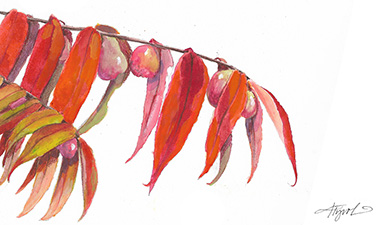
Sumac galls have ancient association
MILLBROOK, N.Y. – The staghorn sumac (Rhus typhina) is a ubiquitous shrub of human-impacted northeastern habitats. Sumac stands occur along most highways and county roads, as well as in disturbed areas and abandoned fields transitioning to shrubland. With the onset of late summer’s cooler nighttime temperatures and shorter days, staghorn[Read More…]
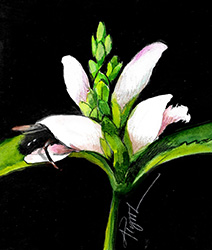
Turtlehead Tests Bumblebees’ Mettle
NEW ENGLAND – Among the blooming perennials of late summer is one that guards its secrets closely. The lockbox blossoms of white turtlehead (Chelone glabra), a native plant in the plantain family, are an ideal match for the powerhouses of the pollinator world: Bombus (bumblebee) species. Turtlehead is found along[Read More…]
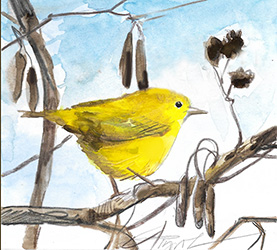
Exploring Shrub Swamps
RANDOLPH – A yellowthroat warbler sang, “witchety, witchety, witch,” as I carefully made my way through the tangle of an alder swamp one afternoon not long ago. I looked about, hoping to catch a glimpse of its yellow breast and black mask. I could hear the twangs of green frogs[Read More…]
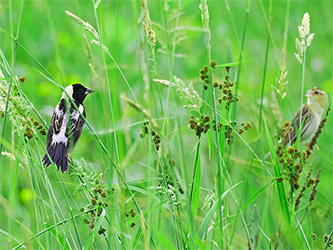
Bobolink birds are in decline, but Vermont’s fields are key to change
NEW HAVEN — Hyla Howe trudged through the high grass. She scanned the ground and took note: red clover, sedge, canary reed. Each plant said something about whether the field would be a good spot for bobolinks. Suddenly came a wave of R2-D2 chirps as 40 or more the birds[Read More…]

Blacklight Walk on Hardwick Trails, August 23
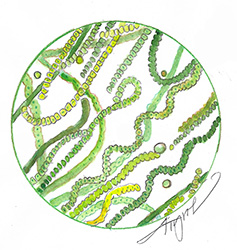
Hidden history of cyanobacteria
WASHINGTON, D.C. – Perhaps you saw the flyers at your town office or a warning sign posted at your favorite swimming hole. The smell might have driven you home, but maybe you crept closer, unable to see anything wrong but unnerved by the deserted shoreline on such a hot and[Read More…]
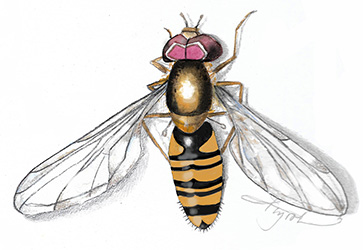
Syrphid flies puzzle and pollinate
NEW ENGLAND – Survey the insects orbiting a globe of milkweed blossoms or the delicate blooms of a chokeberry, and you might spy an apparent chimera. It looks a bit like a bee, perhaps a tad like a wasp, and it darts and pauses mid-flight like a hummingbird. These diminutive[Read More…]
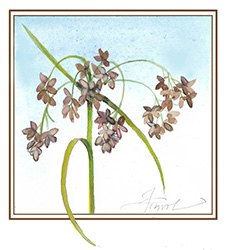
On the Edge, Not on the Brink: Northeastern Bulrush
READING – Twenty years ago, at this time of year, I found myself walking the margin of a marsh in east-central Vermont with Bob Popp, Vermont’s state botanist at that time. We had traveled to that particular site because it showed promise as potential habitat for the rare northeastern bulrush.[Read More…]
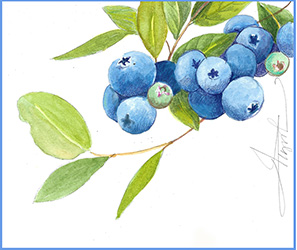
What Makes Blueberries Blue?
EAST CORINTH − Every summer I go blueberry picking and I notice the many colors of blueberries, from the luminous indigo of unpicked berries on a bush, which turn nearly black after handling, to the deep red-purple stain they leave on fingers and fabric. What makes these berries so colorful?[Read More…]


