



MONTPELIER – For the past two years, I have had the privilege of representing the Caledonia Senate District, listening to your concerns, bringing your voices to Montpelier, and working every day to make Vermont a more affordable place to live, work, raise a family and retire. I remain convinced that affordability is Vermont’s defining issue. Whether it is property taxes, housing, energy, healthcare, or the cost of doing business, too many Vermonters, especially in rural communities, are struggling to remain Vermonters.
During my time in Montpelier, I have approached public service with a simple philosophy: listen first, work hard, and do the right thing. Good ideas come from people who live and work in our communities. Meeting with families, local officials, educators, farmers, and business owners has given me a deep understanding of the challenges and opportunities in rural Vermont.
Rural communities are Vermont’s backbone. One-size-fits-all mandates that increase costs while restricting local decision-making are problematic. Rural communities need the flexibility to solve problems in ways that respect what makes them unique.
Before my first Senate term even began in 2025, my Republican colleagues elected me Senate Minority Leader. To be chosen before serving a day in the Senate was unprecedented and reflected the confidence and trust my fellow senators placed in my leadership and knowledge. Together, we accomplished a great deal.
We slowed education property tax growth from 24 percent in the 2023-2024 session to 4 percent in the 2025-2026 session: an important step toward eventual tax relief. We repealed the Tier 3 and Road Rule provisions of Act 181, blocked the Clean Heat Standard, expanded child tax credits, increased exemptions for Social Security income and retired military pay, and continued advancing long-term education reform so Vermonters can have excellent schools and affordable property taxes.
My priorities for 2027 and 2028 will continue to be affordability, tax relief and economic growth and opportunity for all Vermonters. Vermont must also modernize its land-use regulations so that families, businesses, municipalities and farmers can move forward without years of delays and unnecessary costs. Vermont needs regulations that are ground-informed by Vermonters, not out-of-state environmental groups and lawyers. And regulations must be environmentally responsible.
Vermont cannot tax or regulate its way to prosperity. We need policies that encourage economic growth and investment, support entrepreneurs, attract employers, and create opportunities for all. That means fully funding Vermont’s roads and bridges, reducing housing costs, controlling healthcare and energy costs, and providing meaningful tax relief.
Housing affordability remains one of Vermont’s greatest challenges. We should fully implement 802 Homes and CHIP Tax Infrastructure Financing (TIF) to lower construction costs, while also reducing unnecessary regulatory barriers. More housing, reduced housing costs, and lower property taxes will improve affordability, especially for struggling Vermonters.
I support moving the Education Property Tax Credit (income sensitivity) to the General Fund and reducing homestead property taxes by $134 million, while saving the General Fund $20M, and protecting homeowners who presently qualify for the credit. Most tax relief requires a commensurate spending decision. Not in this case, Vermont’s Education Property Tax Credit system is the poster child for a Rube Goldberg machine. Forty percent of homeowners who receive a credit would be better off if there were no property tax credit at all. Those who do benefit can be protected for significantly less money if the program is administered from the General Fund.
I also support broad-based income tax relief that allows Vermonters to keep more of what they earn. Vermont has 900 unfilled positions in government that are included in the annual budget – about $100M.
Energy policy should be guided by affordability and innovation, not costly mandates and carbon taxes that are targeted at those who can least afford them. Making electricity affordable is one of the best ways to encourage cleaner technologies, reduce emissions, and lower electricity costs for everyone.
We must also address rising healthcare costs through greater competition, flexibility, and consumer choice while preserving access to quality care. Vermont should listen more closely to hospitals and healthcare providers. I support providing health insurers the flexibility to offer Vermonters a wider variety of health insurance options.
Agriculture is essential to Vermont’s economy and way of life. Farmers are diversifying, creating niche and value-added products, and expanding agritourism, on-farm sales, and farm events. Government should support these efforts while recognizing that those who work the land are Vermont’s best environmental stewards: no farmers, no food.
Finally, Vermonters deserve safe communities and a justice system that protects law-abiding citizens. I will introduce a constitutional amendment in 2027 to reform Vermont’s bail system so that dangerous and repeat offenders cannot remain in our communities while awaiting trial. I also oppose Raise the Age policies that allow adult offenders to avoid accountability.
If you made it this far, thank you. I will continue to communicate, provide additional policy details as the campaign progresses, and be accessible until November and beyond. Please look for me at an event in your community or let me know if you’d like to meet in a smaller setting. I’m eager to hear your thoughts, questions, and good ideas.
Scott Beck is a senator from the Caledonia District, including the towns of Barnet, Danville, Groton, Hardwick, Newbury, Peacham, Ryegate, St. Johnsbury, Stannard, Walden, Waterford and Wheelock.

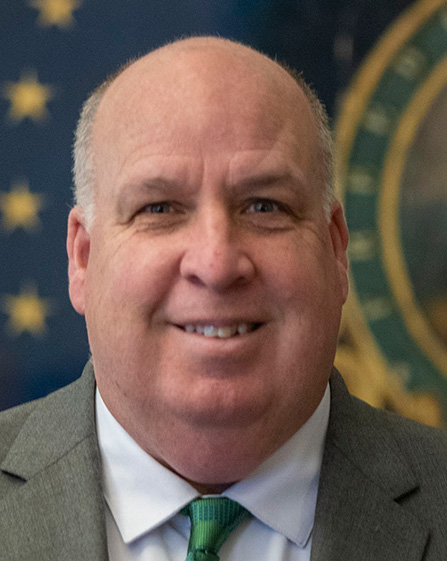
Sen. Scott Beck
Sen. Scott Beck is the Senate Minority Leader and represents Caledonia County


